As an Amazon Associate, we earn from qualifying purchases. Some links on this site are affiliate links at no extra cost to you. Our recommendations are based on thorough research and editorial judgment.


Travel Adapters Vs Converters Vs Transformers: Use Cases

Travel adapters allow devices to fit into foreign outlets without changing voltage, enabling dual-voltage gadgets to work globally. Voltage converters are necessary for single-voltage appliances, as they adjust power levels and typically handle high wattages between 1000W to 2000W. Transformers function similarly but are designed for low-wattage devices requiring longer use and stable voltage. Understanding these distinctions guarantees safe and effective use of electronics abroad. Further insights into compatibility and travel safety will follow.
Key Takeaways
- Travel adapters are essential for connecting dual or multi-voltage devices to foreign outlets but do not convert voltage.
- Voltage converters are necessary for single-voltage appliances in regions with different voltage standards, typically for short-term use.
- Transformers provide stable voltage for low-wattage devices over extended periods, ensuring safe operation for sensitive electronics.
- Dual-voltage devices only require travel adapters, simplifying travel needs and preventing damage from voltage mismatches.
- Always check wattage limits and device specifications to ensure safe usage of adapters, converters, and transformers while traveling.
Understanding Travel Adapters
You may be interested


Travel adapters play an essential role for many travelers by allowing electronic device plugs from one country to connect to the wall outlets of another. These adapters are typically universal, fitting numerous plug types that cater to various socket configurations around the globe. Travelers using devices with an input voltage rating of 100-240V can often rely solely on a travel adapter, effectively handling diverse voltage levels. However, single voltage devices require a voltage converter when local voltage differs considerably from their specifications. It is vital for travelers to verify their device’s voltage requirements beforehand. Many modern electronic devices, such as laptops and phone chargers, are dual voltage, necessitating only a travel adapter for international usage, thereby streamlining the travel experience. Additionally, choosing adapters with built-in safety features can protect devices against overcharging and voltage fluctuations.
The Role of Voltage Converters

Understanding the difference between travel adapters and voltage converters is important for travelers looking to use their electronic devices abroad. Voltage converters are essential for appliances with single voltage ratings, especially in regions with differing mains voltages. These devices can step up or down voltage levels to match equipment requirements, which is critical for heating elements and high-wattage appliances like hair dryers. Most converters support short-term use, typically for 1-2 hours, making them suitable for high-power consumption. It is imperative to guarantee that the voltages are compatible; using an incorrect power adapter can lead to overheating or permanent damage. Consequently, travelers must verify their device’s voltage and the converter’s wattage rating before using them together. Additionally, it is crucial to consider safety features in power converters to prevent potential hazards during use.
Recommended Products
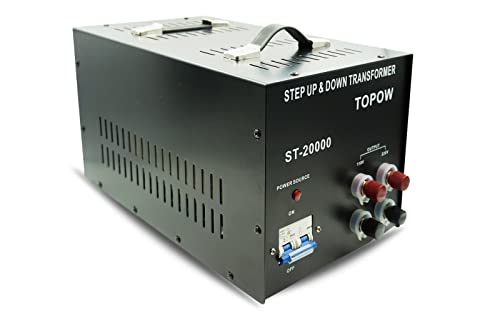
Dual Step Up Or Step Down Functionality / Converts 110/120V to 220/240V or converts 220/240V to 110/120V

Durable 20,000 Watt Maximum Capacity Heavy-Duty Continuous Use Transformer. Remember to leave a margin for power surge and spike

10,000 Watt Capacity: High-power voltage converter transformer, capable of stepping down between 220V to 110V
When to Use Transformers

When traveling internationally, choosing a transformer becomes essential for those using devices with low wattage, particularly microprocessors that require a stable voltage over extended periods. Unlike converters, which are designed for short periods of time and high-wattage appliances, transformers can continuously handle lower wattage devices, such as laptops and digital cameras, without risk of overheating. For devices rated for a single voltage, like older electronics typically operating at 120V, a transformer is necessary to convert voltage levels when traveling to regions with 220-240V systems. Although transformers are heavier and more expensive, they offer precise voltage regulation. When checking device specifications, look for indications of transformer compatibility, ensuring safe operation during international travel with sensitive electronic devices. Additionally, consider the safety features of transformers to ensure reliable performance during use.
Recommended Products

【Automatic Voltage Recognition – No Manual Switching Needed】 Equipped with a self-developed smart chip, this converter automatically detects input voltage and delivers the correct output without manual selection. Prevents incorrect voltage settings that could damage your appliances, making it safer and easier for international travel, overseas relocation, and daily home use.
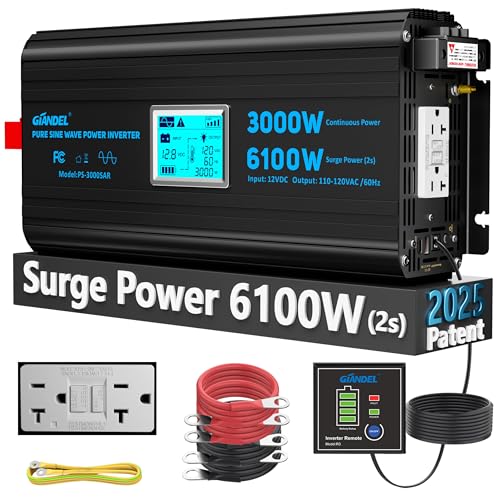
☎ New version 3000 Watt Inverter/6100 Watt Surge Power☎ This 3000Watt Pure Sine Wave Inverter converts 12V DC to 110V /120V AC provides 3000Watt continuous power,2 seconds of 6100 Watt surge power more suitable for high power inductive loads like water heater,air conditioner, freezers, water pumps,Space heaters,1500 watt microwave and other sensitive equipment under 3000watt.2024 latest Patented products utilizing GIANDEL's new technology.Also this FCC approved 3000 watt inverter is friendly for Radio,Speaker and other Radio related devices.

LOW PROFILE MAGNETIC TRANSFORMER - To make this transformer slimmer, lighter and simpler to install, we eliminated unnecessary voltage taps. Just use the 12V and 15V taps; that's all you need for a medium-sized LED landscape lighting system. The 15V tap enables you to compensate for voltage loss on a long or heavily-loaded wire run. Note: Never load any transformer to more than 80 percent of its capacity (240W for this model).
Differences Between Adapters and Converters

Although both adapters and converters serve important roles for international travelers, they fundamentally differ in function and application. Adapters alter the plug shape to connect electronic devices to foreign outlets, whereas converters transform voltage levels for appliances operating on different electrical systems. Travel adapters are essential for devices with incompatible plugs but do not provide voltage conversion, making them suitable for dual or multi-voltage rated gadgets. In contrast, voltage converters are vital for single-voltage appliances, ensuring compatibility with the 220-240V electricity common in many countries outside North America. While adapters can be safely used continuously, converters should only be utilized for limited durations to avoid overheating high-wattage appliances, therefore protecting both the device and user. Additionally, ensuring voltage compatibility is crucial to prevent potential device damage during use.
Recommended Products

True Voltage & Frequency Conversion (50Hz → 60Hz) | Converts 200–240V 50Hz to 120V 60Hz with selectable 100V / 110V / 115V / 120V output. Provides clean, regulated U.S.-standard power for appliances, electronics, instruments, and motor-driven equipment in 50Hz regions.

INPUT: 240 Volts Range: 180V~285V. Requires dedicated 240-volt power.

Heavy Duty Industrial Grade - LiteFuze 15000 Watts Step Down Voltage Converter Transformer Note: This unit needs to be hardwired
Compatibility of Devices and Appliances

A wide range of electronic devices exhibits varying compatibility with international electrical systems, which is essential for travelers to understand. Devices rated for 100-240V, such as smartphones and laptops, require only Travel Plug Adapters to connect to foreign outlets. In contrast, single-voltage appliances, like older hair dryers rated at 120V, need a voltage converter or transformer when used in 220-240V regions to prevent damage. Travelers should check the voltage specifications, often found in the small print on devices. Dual-voltage devices, marked with “120V/240V,” can function safely on either standard. Additionally, higher wattage devices, including coffee makers, may require specific converters designed for short bursts of power, ensuring safe operation while abroad. Understanding safety certifications for adapters can further enhance the reliability of charging setups while traveling.
Recommended Products

Dual swing doors: The best feature of this fridge? It’s dual swing doors! No more needing a special kit and taking the time to change the way your doors open. Straight out of the box, your fridge door can open either on the left or the right and you can switch at any time with no extra steps!
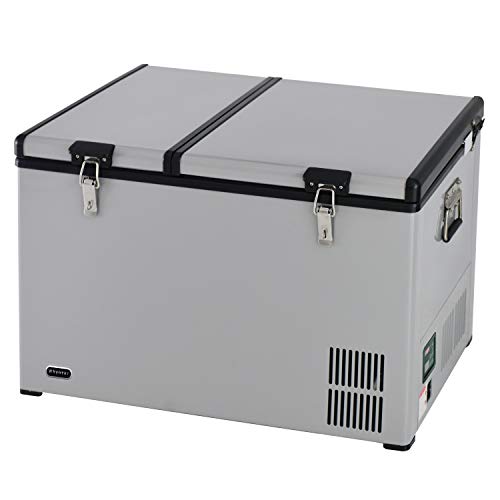
Convertible Freezer / Refrigerator: This 12V portable freezer easily converts to a portable refrigerator; With 65 quarts of storage and a temperature range of -8°F to 50°F, this compact refrigerator / freezer is ideal for cars, boats & RVs

【Universal 115V Compatibility】Featuring a standard 115V voltage design, this RV air conditioner works directly with RV campground power and household outlets without extra converters, perfectly matching your vehicle's electrical system to prevent circuit failures and equipment damage caused by voltage mismatch
Safety Tips for Traveling With Electronics
Traveling with electronics demands careful attention to safety precautions to prevent damage and hazards. Travelers should always check the voltage rating on their devices; those labeled 100-240V can be used internationally without a voltage converter. However, devices rated at 120V should remain unplugged abroad to avoid electrical failure. When utilizing high-wattage devices, such as hair dryers, it is imperative to have the appropriate voltage converter to prevent overheating. Plug adapters do not convert voltage, making them unsuitable for single voltage appliances. For sensitive electronics like laptops, opting for dual voltage devices or using a transformer is advisable, as transformers can support longer usage than standard converters. Always verify the wattage capacity of converters or transformers for safety. Additionally, understanding charger compatibility considerations is crucial for ensuring your devices are safely powered abroad.
Common Misconceptions About Voltage Adaptation
Many individuals misunderstand the roles of travel adapters, voltage converters, and transformers when preparing for international travel. A critical misconception is that travel adapters convert voltage, but they merely allow devices to fit different outlets. Travelers often believe all devices are compatible globally with just a travel adapter; however, single voltage appliances require a voltage converter to avoid damage. It is also incorrectly assumed that all laptops and phone chargers are dual voltage. Checking voltage specifications, such as INPUT: 100-240V, is essential. Additionally, voltage converters are generally suited for short periods, typically 1-2 hours, when used with high wattage devices. Finally, differences in electrical frequency, such as operating a 50 Hz appliance in a 60 Hz country, may damage mechanical motors. Understanding safety features like surge protection can help prevent potential device damage while using these adapters abroad.
Selecting the Right Gear for Your Trip
When preparing for international travel, selecting the right gear is important to guarantee compatibility with local electrical systems. Travelers should first check if their devices are dual-voltage (100-240V), as these typically need only a travel adapter to connect to foreign outlets. For single-voltage devices, using a voltage converter is essential to avoid damage when encountering different standards. High-watt devices like hair dryers require converters rated between 1000W and 2000W for safe use. Conversely, transformers are ideal for lower-wattage electronics requiring continuous operation. It is imperative to verify the wattage of appliances prior to departure. Finally, opting for devices that support dual-voltage guarantees simpler travel, needing only a suitable power cord adapter for various countries. Additionally, considering safety features in chargers and converters can prevent potential electrical hazards during your travels.
Frequently Asked Questions
When to Use a Converter Vs Adapter?
When traveling, a converter is necessary for single-voltage devices requiring voltage adjustments due to power requirements and voltage differences, while an adapter suffices for dual-voltage electronics compatible with local sockets, ensuring safety concerns are addressed at diverse destinations.
What Is the Difference Between a Travel Adapter and a Transformer?
Travel adapters facilitate compatibility by enabling various plug types to fit outlets, while transformers adjust voltage for single-voltage devices. Significantly, 80% of modern electronics function safely with standard travel adapters, ensuring effective charging without risk.
What Is the Difference Between a Transformer and a Converter?
Transformers provide stable voltage compatibility for sensitive devices, while converters cater to high-wattage appliances, enhancing electrical safety. Power requirements, usage scenarios, and travel considerations determine the appropriate choice between the two for device needs.
Do I Need a Converter or Adapter for European Travel?
When traversing the electric currents of Europe, travelers must consult user manuals for voltage compatibility. Adapters accommodate diverse plug types, while devices with specific wattage may require converters to guarantee electrical safety at various travel destinations.


