As an Amazon Associate, we earn from qualifying purchases. Some links on this site are affiliate links at no extra cost to you. Our recommendations are based on thorough research and editorial judgment.


USB‑C in the Car: Fast Charging Protocols on the Road

USB-C fast charging in vehicles offers efficient power delivery, supporting up to 240W with Power Delivery (PD) technology. This allows devices to charge efficiently, often exceeding 50% in just 30 minutes. Common protocols include Power Delivery for Apple devices and Quick Charge for Android. It’s crucial to verify compatibility between chargers and devices for maximum performance. Safety should also be a priority, with high-quality cables and certified chargers helping to prevent hazards. There are more details to take into account for a complete understanding.
Key Takeaways
- Many modern cars feature USB-C ports that support fast charging protocols like Power Delivery (PD) and Quick Charge (QC) for efficient charging on the go.
- USB-C chargers in vehicles can deliver higher wattages, allowing devices to charge faster, often reaching over 50% in about 30 minutes.
- Ensure the car’s USB-C port or adapter is compatible with your device’s fast charging protocols for optimal charging performance.
- Using high-quality, certified cables is essential to ensure safe and efficient power transfer while minimizing heat generation during fast charging.
- It’s advised to activate Power-Saving Mode on devices while charging in the car to improve charging efficiency and reduce background power usage.
What Is USB-C Fast Charging?
You may be interested


While the world of technology continually evolves, USB-C fast charging stands out as a revolutionary advancement in how devices receive power. This technology supports Power Delivery (PD), enabling charging speeds of up to 240W for compatible devices, which greatly reduces recharge times. Fast charging protocols like Programmable Power Supply (PPS) optimize the charging experience by intelligently adjusting voltage and current. Compatibility is key; devices must align with the specific fast charging protocols of their respective chargers. For instance, Quick Charge (QC) is often found in Android devices, while Apple products mainly rely on PD. To guarantee efficient charging, users must utilize a robust USB-C charger along with high-quality cables that meet the required fast charging standards, enhancing safety and performance. Additionally, high wattage chargers can significantly reduce charging times, making them a valuable choice for users on the go.
Advantages of USB-C Technology

As technology advances, the benefits of USB-C technology become increasingly evident, offering users a versatile power and data connection solution. USB-C ports can deliver between 18 to 100 watts of power, drastically surpassing older USB-A ports. This capability allows for fast charging of modern smartphones and other devices, ensuring users experience reliable power supply during travel. The reversible design of USB-C connectors enhances convenience, allowing users to plug in without the frustration of orientation. Additionally, USB-C supports high-speed data transfer, enabling simultaneous file transfers and charging. Many charging devices now utilize USB-C chargers, creating a universal solution that simplifies charging requirements, making it an ideal choice for those seeking efficiency and versatility in their technology. Furthermore, fast charging capabilities enable users to recharge their devices quickly, reducing downtime on the road.
Understanding Power Delivery (PD) Capabilities

Power Delivery (PD) capabilities represent a significant advancement in charging technology, allowing devices to charge more rapidly and efficiently. This protocol supports power levels up to 100W, enabling fast charging for a wide range of devices, from smartphones to laptops. With PD, compatible devices can charge to over 50% in just 30 minutes, making it ideal for car rides. The technology can adjust voltage and current output according to each device’s needs, enhancing charge efficiency. Safety certifications associated with PD guarantee reliable power management, preventing overheating and prolonging device health. To fully utilize PD, both the power source and the device must support the protocol, along with USB-C cables rated for higher wattage, including USB-C to Lightning options. Additionally, using cables that support high wattage charging can further improve the charging experience in vehicles.
Recommended Products

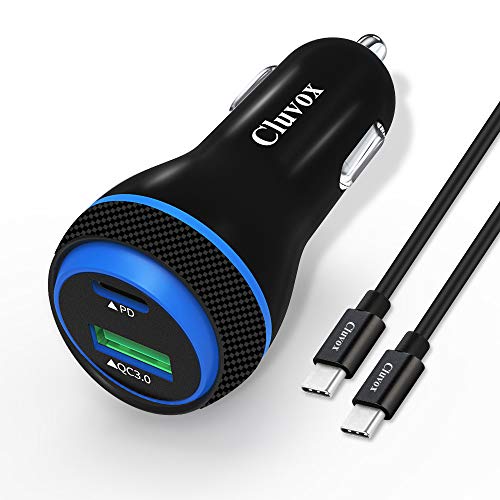
60W Dual Fast Charging, Independent Output: Two ports, full speed. The USB‑C and USB‑A ports each deliver up to 30W, so two devices charge simultaneously without power drop or crosstalk—perfect for phone + tablet or driver + passenger.

Common Fast Charging Protocols Supported by USB-C Chargers

Fast charging has transformed the way consumers power their devices, making it essential to understand the protocols supported by USB-C chargers. The most widely adopted fast charging protocol is USB Power Delivery (PD), which supports power transfer ranging from 18W to 240W, suitable for various devices, including smartphones and laptops. Qualcomm Quick Charge (QC) is another common protocol, found in many Android devices, offering fast charging capabilities between 18W and 100W through its various versions. USB-C chargers often support multiple fast charging protocols simultaneously, ensuring compatibility across diverse devices. To achieve optimal fast charging speeds, both the charger and the device must be compatible with the same charging protocol, such as PD for iPhones or QC for Android models, enhancing overall efficiency. Many USB-C chargers are designed to power laptops with higher wattage models preferred for demanding devices.
How to Identify Charger Compatibility With Your Device

Identifying charger compatibility with a device is vital for ensuring efficient and safe charging. To achieve this, users must check whether their charger and device support the same fast charging protocols, such as USB Power Delivery (PD) or Quick Charge (QC). It’s also important to verify that the charger offers adequate wattage—at least 18 watts for smartphones and 30 watts or more for tablets and laptops. Safety certifications, like UL or CE, indicate industry standards that guarantee performance during charging. Furthermore, utilizing high-quality USB-C cables rated for fast charging is essential, as inferior cables can hinder performance or pose safety risks. Finally, reviewing a device’s specifications helps confirm compatibility with specific charging protocols, ensuring the best charging for multiple devices. Additionally, understanding the importance of energy monitoring capabilities can help users track power consumption effectively while charging on the go.
Real-World Charging Performance and Expectations
Many drivers experience varied charging performance when using USB-C ports in their vehicles, particularly when multiple devices are connected simultaneously. For instance, front USB-C ports may provide charging speeds comparable to an 18W charger, while rear ports often deliver a slower trickle at approximately 5V and 1.5A. This charging performance can be inadequate for everyday use, especially when devices are actively utilized. Fast charging necessitates specific charging protocols like Power Delivery (PD), which are not universally available. To improve charging efficiency, using a high-quality USB-C fast charger (30W or more) plugged into the 12V cigarette lighter is a practical choice. Relying solely on built-in USB ports in cars may not yield ideal results for all devices. Additionally, many USB charging hubs, such as those utilizing GaN technology, enhance efficiency and allow for faster charging even in compact designs.
Safety Considerations for Fast Charging in Vehicles
While using fast charging in vehicles can greatly enhance convenience, it is essential to evaluate the associated safety risks. Fast charging generates increased heat, making effective temperature management vital to prevent overheating. Overheating can damage both devices and batteries. Utilizing charger models with recognized safety certifications, such as UL, CE, and FCC, minimizes electrical hazards. Technologies like Programmable Power Supply (PPS) and Power Delivery (PD) optimize charging voltage, enhancing safety and efficiency. Regularly monitoring charger temperatures and ensuring ample airflow help prevent excessive heat buildup. Consumers should avoid low-quality or unknown-brand chargers to reduce risks of power surges and instability, which could ultimately lead to device damage or battery failure during quick charging sessions using USB ports. Additionally, using surge protectors can provide an extra layer of defense against electrical issues while charging devices in vehicles.
Tips for Optimizing Your Fast Charging Setup
To enhance fast charging efficiency in vehicles, specific strategies can be implemented. First, use a high-quality 12V power adapter that provides at least 30 watts and supports fast charging protocols like USB Power Delivery (USB-PD) or Qualcomm Quick Charge (QC). Next, employ MFi-Certified cables for Apple devices or reputable brands for Android devices, rated for high-wattage charging, ideally 60W or 100W. Additionally, fine-tuning phone settings by activating Power-Saving Mode or Airplane Mode can improve charging speed, especially during navigation or streaming. Maintaining organized, undamaged cables ensures ideal connections for fast charging. Finally, monitor charger temperature to enhance safety, as adequate ventilation prevents overheating, which can damage devices and hinder performance, guaranteeing adherence to established charging standards. Using high-grade materials in cables can further enhance charging reliability and safety.
Frequently Asked Questions
Does USB-C Work in Cars?
USB-C compatibility thrives in modern vehicles, with integrated USB-C ports offering varied charging speeds. While some support fast charging and power delivery, others falter in device support, making dedicated car chargers essential for ideal in-vehicle technology.
Are All USB-C Cables Capable of Fast Charging?
Not all USB-C cables support fast charging. Cable quality, compatibility issues, and power delivery specifications determine charging speed. Length impacts performance, and insufficiently rated cables can pose overheating risks and hinder data transfer for demanding devices.
What Is the Fastest Charging Protocol?
The fastest charging protocol is USB Power Delivery, enabling impressive charging speeds comparison with other fast charging technologies. Compatibility issues arise, influencing efficiency in portable charging solutions, while impacting battery health and evolving charging standards and accessories.
Can I Use USB-C in My Car?
Yes, USB-C can be used in cars, enhancing car audio and device compatibility. Consider factors like cable length, charging speed, port location, power output, brand differences, durability concerns, and available accessory options for ideal results.


