As an Amazon Associate, we earn from qualifying purchases. Some links on this site are affiliate links at no extra cost to you. Our recommendations are based on thorough research and editorial judgment.


Measuring Protection: Interpreting MOVs, Filtering, and Indicators

Measuring protection in electronic circuits involves understanding Metal Oxide Varistors (MOVs), effective filtering techniques, and reliable indicators. MOVs safeguard circuits from voltage spikes, while filtering techniques like low-pass and high-pass filters improve measurement accuracy by reducing noise. Monitoring indicators, such as visual damage signs and voltage measurements, guarantees that protective devices function correctly. Specifications, including a minimum joule rating of 1000, are essential for effective surge protection. Explore further to uncover more insights into optimizing circuit protection.
Key Takeaways
- MOVs protect circuits from voltage spikes by clamping excessive voltage based on their rated clamping voltage specifications.
- Effective filtering techniques, such as low-pass and high-pass filters, enhance MOV performance by minimizing measurement noise.
- Gaussian noise complicates data analysis, making variance and standard deviation crucial for evaluating MOV reliability under noise conditions.
- Visual indicators like arcing or discoloration signify MOV damage, necessitating regular checks for safe circuit operation.
- Adhering to joule ratings and specifications ensures the effectiveness of surge protection systems and optimal performance in electronic devices.
Understanding Metal Oxide Varistors (MOVs)

You may be interested


Although electrical circuits are designed to operate within specific voltage limits, unexpected voltage spikes can pose a serious risk to sensitive components. Metal Oxide Varistors (MOVs) are vital devices designed to protect against these surges. They are voltage-dependent resistors that effectively clamp excessive voltage spikes, typically rated for transient voltages up to 1,500 volts. MOVs exhibit non-linear resistance characteristics that reduce impedance during voltage surges, working for both low frequency and high frequency applications. Their clamping voltage guarantees circuit protection against transient overvoltages in DC power systems. Monitoring the lifetime and effectiveness of MOVs is essential; indicators such as discoloration signal the need for replacement. Proper testing using specific equipment can ascertain their breakdown voltages, guaranteeing peak circuit integrity. Additionally, understanding the surge protection ratings is crucial in choosing the right MOV for your specific applications.
Recommended Products

RSH-50 Surge Protector and Voltage Range Monitor inside a NEMA 3R/IP66 enclosure


EASILY REPLACE IMODULES, NO NEW SPD UNIT REQUIRED - This surge protector comes with three IModules featuring LED lights for quick power and protection status indication. Easily replace IModules without the need for installing a new SPD unit.
Importance of Protection in Electronic Circuits

Protection is a critical aspect of electronic circuit design, ensuring reliable operation in the face of potential disruptions. Metal Oxide Varistors (MOVs) are crucial for shielding circuits against voltage spikes, effectively clamping excess voltage and redirecting surge currents. Their performance can be assessed through damage indicators, such as arcing or discoloration, which signal the need for replacement. Regular testing with specialized devices, like the Times Protect LP-SPT, determines breakdown voltage and sustains circuit protection. Additionally, implementing band pass filtering techniques enhances the circuit’s reliability by minimizing noise and blocking unwanted high-frequency signals. Ultimately, clear indicators, including return and insertion loss measurements, are essential for evaluating the effectiveness of MOVs and ensuring robust protection strategies in electronic circuits. Furthermore, the use of surge protectors with UL listings can provide additional assurance of compliance with safety standards.
The Role of Filtering Techniques

Filtering techniques play an essential role in enhancing the measurement quality of electronic circuits, particularly when evaluating the performance of protection devices like Metal Oxide Varistors (MOVs). Employing effective filtering strategies is vital for noise reduction, ensuring that only relevant signals contribute to test results. Low-pass filters excel at eliminating high-frequency noise while preserving low-frequency signals, improving surge protection measurement reliability. Conversely, high-pass filters tackle low-frequency drift, accurately capturing surge events without interference. The choice between IIR and FIR filters markedly impacts implementation efficiency and stability; IIR filters may introduce feedback complexities, while FIR filters provide inherent stability. The appropriate filtering method ultimately preserves signal integrity, allowing for more reliable evaluations of MOV performance and contributing to better overall circuit protection. Understanding surge protection ratings is crucial for assessing the effectiveness of these filtering techniques in protecting electronic devices.
Gaussian Noise and Its Impact on Measurements

Measurements in electronic systems can be markedly affected by various forms of noise, with Gaussian noise being a prevalent type. Originating from various sources, Gaussian noise generates signal distortion effects that can obscure critical data and complicate the analysis of measurement results. This type of noise can lead to measurement reliability concerns when evaluating surge protection devices, such as MOVs. According to the central limit theorem, diverse random variables, when summed, trend toward a normal distribution, resulting in a significant portion of samples falling within one standard deviation of the mean. Consequently, comprehending variance and standard deviation becomes essential for determining the degree of measurement variation induced by Gaussian noise, ultimately informing the effectiveness of protective devices during transient event tests. Additionally, understanding data transfer capabilities can further enhance the analysis of measurement reliability in the context of surge protection.
Standard Deviation, RMS, and Variance Explained

Understanding the concepts of standard deviation, root-mean-square (RMS), and variance is essential for anyone analyzing data in an electronic context. Standard deviation (σ) indicates how individual measurements vary from the mean, showcasing data reliability in electronic systems. Variance (σ²), the average of the squared differences from the mean, provides insight into measurement accuracy. The RMS evaluates the magnitude of varying electrical quantities, fundamental for understanding power levels in datasets. Significantly, in a Gaussian distribution, 68.2% of samples lie within one standard deviation of the mean. Recognizing these metrics helps assess whether results hold statistical significance, ultimately contributing to better performance analysis in protection systems like Metal Oxide Varistors and filtering devices, ensuring ideal functionality and safety. Additionally, understanding surge protection is vital for evaluating the effectiveness of power line conditioners in safeguarding sensitive electronic equipment.
Digital Filters and Their Applications
Digital filters serve as essential tools in modern electronic systems, especially when a clear signal is necessary for accurate analysis. These software-based tools enhance data reliability, enabling users to remove noise from input measurements effectively. Various filter design strategies, such as low-pass or band-pass configurations, cater to specific application needs. The flexibility of digital filters allows for real-time applications, providing customization based on particular measurement criteria. Additionally, algorithm efficiency has improved noticeably with advancements in microprocessor speeds, facilitating real-time data processing. Therefore, digital filters not only serve diverse functions in sensor data enhancement but also demonstrate the ability to adapt and respond rapidly to changing requirements, benefiting numerous technological domains and applications in today’s digital age. Moreover, understanding surge protection ratings can further enhance the reliability of electronic systems by ensuring they are safeguarded against electrical surges.
Comparing IIR and FIR Filters
Filters play a significant role in improving signal processing, which leads to a natural examination of the two primary types: Infinite Impulse Response (IIR) filters and Finite Impulse Response (FIR) filters. IIR filters utilize feedback from previous outputs, offering IIR advantages such as computational efficiency and reduced data buffering compared to FIR filters, which rely solely on past inputs. However, FIR filters guarantee stability and linear phase responses, making them ideal for applications sensitive to phase distortion. Despite their benefits, FIR filters face disadvantages, including complex storage requirements that can complicate design. In filter applications where resource efficiency is critical, IIR filters often provide a superior solution, achieving similar outcomes with fewer computations, albeit without the phase fidelity of FIR options. Additionally, safety features like surge protection can enhance the reliability of devices connected through these filters.
Types of Filters and Their Functions
Various types of filters serve specific functions in signal processing, each designed to address distinct needs across applications. Low-pass filters, a category of passive filters, allow signals below a certain cutoff frequency to pass while attenuating higher frequencies, effectively reducing high-frequency noise. Conversely, high-pass filters permit high-frequency signals to pass, which helps eliminate unwanted noise or baseline drift. Band-pass filters isolate specific frequency ranges, advantageous for applications like audio processing. Notch filters, or band-stop filters, reject narrow bands of frequencies, eliminating interference from specific sources. The choice of filter design influences data quality considerably, as active filters can offer more complex, adjustable processing capabilities compared to passive designs, enhancing measurement reliability across various contexts. Additionally, wire gauge specifications can impact the performance of filters in electronic devices, ensuring optimal signal integrity.
Recommended Products

UAF42 is a universal active filter that can be configured for various low-pass, high-pass, and band-pass filters.

UAF42 Low Pass High Pass Bandpass Filter Active Filter Module Filter Programmable Amplification

AD9850 adopts 125MHz active crystal.
Indicators for Monitoring Circuit Status
To guarantee the reliability of protection circuits, it is crucial to employ effective indicators for monitoring their status. Surge indicators, such as visual damage signs like arcing or discoloration, are critical for evaluating circuit status after a surge. Circuit diagnostics also include careful measurements, like Return Loss/VSWR and Insertion Loss, which reveal the health of MOVs and other protective devices. The LP-SPT device allows users to check breakdown voltages, indicating the operational status of coaxial protection devices. For gas tube protectors, normal functionality is indicated by surge side readings between 480 and 720 volts. Additionally, monitoring peak voltages using bi-polar diode types assures that protective components work within their specified operational parameters, enhancing overall protection evaluation. Furthermore, a joule rating of at least 1000 is recommended for basic surge protection, ensuring effective energy absorption during surges.
Recommended Products

Items Included:1 x APC 1500VA Smart UPS with SmartConnect, Rack Mount UPS Battery Backup, Sinewave, AVR, 120V, 1 x Cat5e Ethernet Cable, 1 x 6 Assorted Color Wire Ties
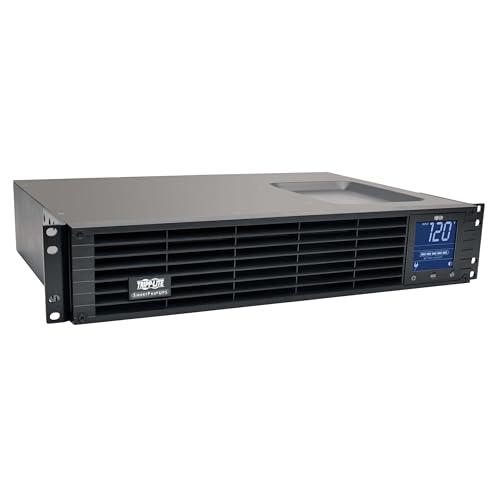
1500VA RACK MOUNT UPS: Battery backup features 1000W capacity, 8 outlets (NEMA 5-15R), and a 10ft power cord (NEMA 5-15P). Offers Pure Sine Wave output, Automatic Voltage Regulation (AVR), EMI/RFI noise filtering, and 570 joules of surge protection.

【Compatibility】:Compatible with Breckwell Replacement 1 RPM Control Circuit Board. Fits Most Models Manufactured 2002 to Current. Be sure to check out the Product Description for compatible serial numbers.
Best Practices for Optimal Protection
Understanding the ideal performance of protection circuits necessitates adherence to best practices that guarantee reliability and longevity. Following MOV testing protocols is vital; testing should include measuring the peak breakdown voltage with devices like the LP-SPT to confirm functionality within the specified range. Regular inspections for visual damage indicators, such as arcing and discoloration, help assess surge protector longevity. It is also important to utilize digital filtering techniques alongside traditional measurement practices to secure peak performance. When conducting voltage tolerance assessments, maintaining a margin of +/- 20% around manufacturer specifications allows for potential variations in performance. Overall, employing these methods enhances the effectiveness and durability of surge protection systems. Additionally, ensuring that surge protectors have a high joule rating can significantly improve device safety against electrical spikes.
Frequently Asked Questions
What Are the Principles of Surge Protection?
Surge protection principles involve various surge protection types, utilizing MOV characteristics to absorb voltage spikes. Additionally, filtering techniques guarantee normal signal passage while blocking high-frequency noise, enhancing the resilience of electrical systems against transient disturbances.
What Is the Difference Between Surge Protection and Lightning Protection?
Surge protection focuses on diverting transient voltage from sensitive equipment using surge suppressors, while lightning protection employs grounding techniques to channel lightning energy safely into the ground, minimizing potential damage from direct strikes to structures.


