As an Amazon Associate, we earn from qualifying purchases. Some links on this site are affiliate links at no extra cost to you. Our recommendations are based on thorough research and editorial judgment.


Dusk‑to‑Dawn Sensors: How Photocells Automate Lighting

Dusk-to-dawn sensors utilize photocells to automate outdoor lighting by detecting ambient light levels. These sensors activate lights at sunset and deactivate them at sunrise, ensuring consistent illumination. Their adjustable sensitivity minimizes false activations from transient light sources. By enhancing safety and security, they illuminate pathways and deter intruders, resulting in significant energy savings. Proper installation and regular maintenance are essential for peak performance. Further information about their features and setup can enhance understanding and effectiveness.
Key Takeaways
- Dusk to dawn sensors use photocells to detect ambient light levels, automatically activating lighting when it gets dark.
- They ensure energy efficiency by turning lights on at dusk and off at dawn, reducing energy costs.
- The sensors enhance safety by illuminating outdoor areas and deterring potential intruders during nighttime.
- Dusk to dawn sensors can be adjusted for sensitivity and often include delay functions to minimize false activations.
- Their applications range from residential lighting to public safety, improving visibility in various settings.
Understanding Dusk to Dawn Sensors
You may be interested


As outdoor lighting options continue to evolve, dusk to dawn sensors have emerged as a practical solution for homeowners and businesses alike. Utilizing photocells, these sensors automatically activate outdoor lighting when ambient light levels fall below a predetermined threshold, ensuring superior illumination at night. They turn lights off at dawn when natural light increases, promoting significant energy efficiency. By using LED fixtures with these sensors, users can further reduce energy consumption, as LEDs provide a longer lifespan of up to 50,000 hours. Additionally, dusk to dawn sensors enhance safety by illuminating dark spaces, deterring potential intruders. Users can adjust the sensor’s sensitivity to suit various environmental conditions, allowing for customizable lighting that meets specific needs and preferences. These sensors also feature a delay function to minimize false activation from passing vehicles or stray lights, ensuring reliable performance throughout the night.
The Functionality of Photocells

A variety of outdoor lighting systems utilize photocells to provide automatic illumination by detecting changes in ambient light levels. These sensors, also known as light-dependent resistors, operate by changing their resistance in response to light, effectively distinguishing between day and night. Dusk to dawn lights connected to photocells automatically turn on as daylight diminishes, conserving energy by remaining off during the day. Many modern photocells offer sensitivity adjustments and built-in delay settings, preventing unnecessary activation from brief light sources. This reliable functionality greatly enhances outdoor safety and energy efficiency in various applications, including street lighting and residential landscapes, ensuring that lighting fixtures illuminate spaces effectively at night while conserving energy. Energy-efficient LED technology is a prime example of how advanced lighting solutions integrate with photocell systems for improved performance.
Benefits of Automatic Lighting Control

Automatic lighting control through dusk-to-dawn sensors provides significant advantages for both residential and commercial settings, enhancing security and efficiency. These sensors operate based on ambient light levels, ensuring lights activate automatically at sunset, offering security purposes by illuminating outdoor areas and deterring intruders. Users benefit from notable energy savings as the system reduces electricity usage, particularly with LED fixtures, which can last up to 50,000 hours due to reduced operation frequency. Additionally, automatic lighting control enhances safety by illuminating pathways and entrances, minimizing the risk of accidents at night. This convenience eliminates the need for manual intervention, ensuring reliable illumination exactly when needed without user oversight. Such features make dusk-to-dawn sensors a practical choice for efficient lighting solutions. Moreover, integrating these sensors with weather-resistant outdoor cords can further enhance their functionality and durability in outdoor environments.
Recommended Products

【Precise Dusk to Dawn Control Saves Money】- Convert your Fixtures to Auto On/Off,Your one-stop solution for automatic lighting.Get that‘always home’ look without the always-on cost.Use the dusk to dawn sensor on the light with maximum power of 1800W, use it on a circuit with a maximum current of 9.2A, otherwise the photocell will burn out
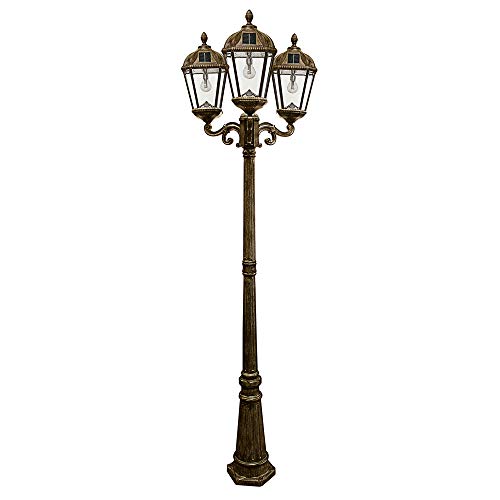
NEWEST UPGRADED SOLAR TECHNOLOGY - Larger solar panels for faster charging. Glass-covered solar cells won't cloud like inferior epoxy-covered cells. Longer-lasting battery to shine most/all of the night. Engineered to last for years. (E14 Bulb Base)

All-in-One Outdoor Lighting Post: Includes a built-in dusk-to-dawn sensor for automatic lighting, a convenient 120V outlet for seasonal décor or power tools, and a decorative cross arm for added charm.
Applications of Dusk to Dawn Sensors

Dusk-to-dawn sensors find numerous applications across various environments, enhancing both safety and efficiency. These sensors automatically illuminate outdoor areas, such as public streets, providing enhanced safety for pedestrians and drivers after dark. In residential settings, homeowners benefit from the convenience and security of well-lit porches, driveways, and gardens. Commercial and industrial businesses utilize dusk to dawn sensors in parking lots and on building exteriors, deterring criminal activity while improving visibility for customers and employees. Additionally, landscape and architectural lighting can maximize visual appeal and minimize energy costs by using energy-efficient LED technology. Industrial facilities also leverage these sensors to guarantee safe working conditions during night shifts, illustrating their versatility across different sectors. Furthermore, integrating outdoor surge protectors with these sensors can provide added protection for electrical devices against voltage spikes during adverse weather conditions.
Recommended Products

Dusk to Dawn Technology – Keep your home as efficient as possible, with dusk to dawn technology the animated flame bulb will immediately ignite when the sun starts to set

[ Commercial Grade & 5 Years Service ] Super bright 450W led parking lot light with 67,500Lm, 5000K daylight white, TYPEⅢ beam angle, no glare, no strobe light, best area coverage for outdoor area lighting. 5-year replacement service for any defects or quality issues
[ Commercial Grade & 5 Years Service ] Super bright 400W led parking lot light with 60,000Lm, 5000K daylight white, TYPEⅢ beam angle, no glare, no strobe light, best area coverage for outdoor area lighting. 5-year replacement service for any defects or quality issues
Differences Between Dusk to Dawn and Motion Sensors

Understanding the distinctions between dusk to dawn and motion sensors is essential for selecting the right lighting solution for specific needs. Dusk to dawn sensors activate based on ambient light levels, turning on at sunset and off at sunrise. In contrast, motion sensors detect movement to engage lighting, typically for a set duration ranging from seconds to minutes. Dusk to dawn lighting provides continuous illumination throughout the night, enhancing safety in outdoor lighting, while motion sensors conserve energy by illuminating only when activity is detected. Photocell sensors in dusk to dawn systems rely on natural light changes, whereas motion sensors utilize infrared technology to detect movement. Each technology serves distinct purposes, with dusk to dawn sensors ideal for consistent lighting and motion sensors suitable for security applications. Additionally, understanding the importance of surge protectors can further enhance the safety and longevity of outdoor lighting systems.
Recommended Products

Excellent Lighting & 5 Years Service - BBESTLED parking lot light efficiency is up to 140lm/w which means 400W can output 60,000Lm, 5000K daylight white, TYPEⅢ beam angle, Anti-shock, anti-moisture, no glare, no strobe light, no ghosting. While protecting your eyes, it also greater area coverage for outdoor area lighting needs. BBESTLED offer a 5-year service FREE replacement that covers any quality or defect issues

【Efficiency & Brightness】The parking lot light efficiency is up to 140lm/w which means 400W can output 60,000Lm,greater area coverage for outdoor area lighting needs. 5000K color temperature of lighting is a nice choice for street light illumination. LED area light CRI is over 80

Excellent Lighting & 5 Years Service - BBESTLED parking lot light efficiency is up to 150lm/w which means 400W can output 60,000Lm, 5700K daylight white, TYPEⅢ beam angle, Anti-shock, anti-moisture, no glare, no strobe light, no ghosting. While protecting your eyes, it also greater area coverage for outdoor area lighting needs. BBESTLED offer a 5-year service FREE replacement that covers any quality or defect issues – your risk-free investment
Key Components of Dusk to Dawn Lighting
A well-designed dusk to dawn lighting system incorporates several key components that work together to provide reliable illumination. Central to this system is the photocell sensor, which detects ambient light levels and enables automatic activation of the fixture at dusk. These systems typically feature durable weather-resistant housing, often crafted from robust materials like aluminum or polymer plastics, ensuring protection against outdoor elements. Many dusk to dawn lights employ energy-efficient LED technology, considerably extending bulb lifespan up to 50,000 hours and reducing power consumption compared to traditional bulbs. Additionally, advanced photocells may include adjustable sensitivity settings, allowing users to fine-tune responsiveness, preventing false activations, and further optimizing light management for varied conditions. For enhanced outdoor security, consider incorporating battery flood lights that offer high lumens output and motion detection capabilities.
Recommended Products

【Adjustable Power & CCT | 9-in-1 Fixture】This 480V LED Parking Lot Light lets you choose from 3 power settings (320W/48000LM, 256W/38400LM and 192W/28800LM) and 3 color temperatures (3000K, 4000K, 5000K). With up to 150 lm/W, one fixture covers parking lots, stadiums, and roadways.Customize brightness and light color to match your exact needs.

Light Up Larger Area: AC 277-480V, Up to 150lm/watt, the 480V 320W LED parking lot lights bring 48000LM with SMD3030 chips at 5000K daylight white. Anti-shock, anti-moisture, no glare, no strobe light, no ghosting, protecting your eyes

【Adjustable Power & CCT | 9-in-1 Fixture】This 480V LED Parking Lot Light lets you choose from 3 power settings (360W/54,000 lm, 288W/43,200 lm, 216W/32,400 lm) and 3 color temperatures (3000K, 4000K, 5000K). With up to 150 lm/W, one fixture covers parking lots, stadiums, and roadways.Customize brightness and light color to match your exact needs.
Choosing and Installing Dusk to Dawn Lights
Selecting appropriate dusk to dawn lights requires careful consideration of several key factors to guarantee maximum efficiency and effectiveness. The brightness levels, measured in lumens, are critical for ensuring visibility and safety in outdoor areas. Additionally, selecting a suitable color temperature, expressed in Kelvins, creates the desired atmosphere; lower temperatures provide warmth, whereas higher ones offer a daylight-like appearance. Proper installation involves positioning the photocell sensor in unobstructed areas to enhance performance based on ambient light conditions. Fixtures should be mounted at appropriate heights to optimize illumination without disturbing neighbors. Regular maintenance, such as cleaning the photocell sensor, is essential for prolonging the lifespan and efficiency of these energy-conserving outdoor lighting solutions. Moreover, taking into account surge protection ratings can further ensure that these lighting systems are safeguarded against potential voltage spikes.
Recommended Products

【Efficiency & Brightness】The parking lot light efficiency is up to 140lm/w which means 400W can output 60,000Lm,greater area coverage for outdoor area lighting needs. 5000K color temperature of lighting is a nice choice for street light illumination. LED area light CRI is over 80

✅[ 400W Commercial Grade LED Flood Light ] - This is a 400W LED LED shoebox parking lot Light with an input voltage of 277-480V. It's 400W, super bright 5000K daylight, Equivalent 1500W, 60000 lumens, CRI > 85, TYPEⅢ beam angle. IP65 rated waterproof, suitable for outdoor using during rain, sandstorm, snowstorm, harsh weather conditions

[ Commercial Grade & 5 Years Service ] Super bright 400W led parking lot light with 60,000Lm, 5000K daylight white, TYPEⅢ beam angle, no glare, no strobe light, best area coverage for outdoor area lighting. 5-year replacement service for any defects or quality issues
Frequently Asked Questions
What Is Usually to Automatically Control Dusk to Dawn Lighting?
Automatic timing and light sensitivity are typically used to control dusk to dawn lighting, enhancing energy efficiency, outdoor safety, and user convenience. Installation options and lighting adjustments are available, especially with smart home integration and solar technology.
How Is a Photocell Used in Lighting Automation?
Photocell technology automates outdoor lighting by utilizing light sensitivity to detect ambient light, ensuring energy efficiency. Proper sensor placement, weather resistance, and circuit connections facilitate seamless installation, while some systems offer automatic dimming for smart homes.
How Do Dusk to Dawn Motion Sensor Lights Work?
Like a watchful guardian, dusk-to-dawn motion sensor lights activate using motion detection technology, adjusting light sensitivity to conserve energy. With strategic sensor placement and weather-resistant materials, they enhance outdoor security through seamless smart home integration and user experience feedback.
What Controls Dusk to Dawn Lighting?
Dusk to dawn lighting is controlled by photocell functions that detect light intensity, adjusting for daylight hours. Proper sensor calibration, installation tips, and maintenance requirements enhance energy savings in outdoor applications while addressing troubleshooting issues and facilitating product comparison.


