As an Amazon Associate, we earn from qualifying purchases. Some links on this site are affiliate links at no extra cost to you. Our recommendations are based on thorough research and editorial judgment.


Sizing a UPS: VA, Wattage, Power Factor, and Runtime Basics

Sizing a UPS involves understanding VA (volt-amperes), wattage, and power factor. VA indicates the UPS’s apparent power capacity, with a typical power factor ranging from 0.7 to 1.0. It is vital to calculate total power needs, including a 20-25% safety margin for reliability. Additionally, runtime varies based on load; for instance, a 1 kVA UPS may support a 900-watt load for about 11 minutes. Further insights on equipment types and scalability are essential for effective planning.
Key Takeaways
- Understand that VA indicates apparent power while wattage reflects the real power consumed, with power factor affecting efficiency.
- Calculate total power needs by summing the wattage of connected devices and convert it to VA using the power factor.
- Allow a 20-25% headroom in total power calculations to accommodate future expansion and unexpected spikes in power demand.
- Aim to use no more than 80% of the UPS capacity to avoid overheating and ensure reliable performance.
- Consider the desired runtime, as heavier loads reduce UPS battery runtime; a standard goal is 10-15 minutes for safe shutdown.
Understanding VA and Wattage in UPS Sizing
You may be interested


In the landscape of uninterruptible power supplies (UPS), understanding the relationship between volt-amperes (VA) and wattage (W) is essential for effective sizing. Volt-amperes indicate the apparent power in a circuit, while wattage represents the real power consumed by the load. The power factor, which typically ranges from 0.7 to 1.0, plays a critical role in converting wattage to VA. For example, a 1 kVA UPS can handle 1,000 VA, but inefficiencies may limit its actual output to about 900 watts with a 0.9 power factor. To guarantee stability, it is wise to use no more than 80% of the UPS’s capacity and include a safety margin of 20-25% in the total VA calculation. Additionally, incorporating surge protection with a high joule rating, such as 4,000 joules, can further ensure the safety of connected devices during power fluctuations.
The Role of Power Factor
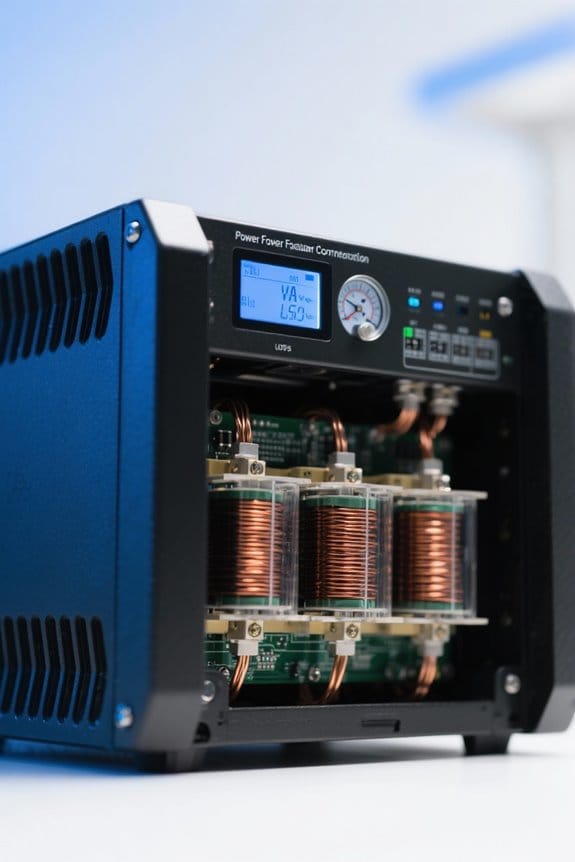
Power factor frequently plays an essential role in determining the efficiency of a UPS system. It is a dimensionless number ranging from 0 to 1, representing how effectively electrical power is converted into useful work output, calculated as Watts divided by Volt-Amperes (VA). For instance, a UPS rated at 1 kVA with a power factor of 0.9 can support a maximum load of 900 Watts. Lower power factor values denote less efficient systems, often necessitating larger UPS capacity to meet the same wattage needs. Additionally, many UPS systems have standard power factors around 0.8 to 0.9. Understanding the power factor is vital for ensuring accurate sizing and maintaining optimal power protection during critical operations without risking overloads. Furthermore, selecting a UPS with features like Automatic Voltage Regulation (AVR) can enhance performance and extend battery life.
Calculating Total Power Requirements
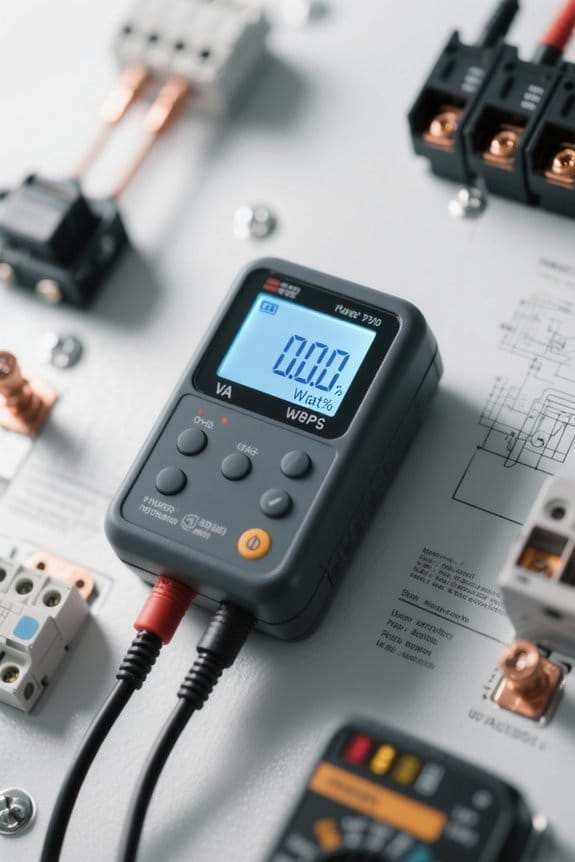
Calculating the total power requirements for a UPS involves careful consideration of the wattage of all connected devices. Users should sum the wattage ratings found on device labels or manufacturer specifications to determine this total power. Once calculated, convert the total watts to Volt-Amperes (VA) using the formula VA = Watts ÷ Power Factor. It is essential to include an additional 20-25% headroom in this calculation to guarantee the UPS capacity meets current and future needs. Additionally, for devices with high inrush currents, the initial wattage spike must also be factored in. Lastly, verify the calculated total power load does not exceed 80% of the UPS capacity to prevent system failure and maintain ideal runtime. Understanding the importance of surge protection capabilities will also help in selecting a UPS that can safeguard your devices during power fluctuations.
Recommended Products
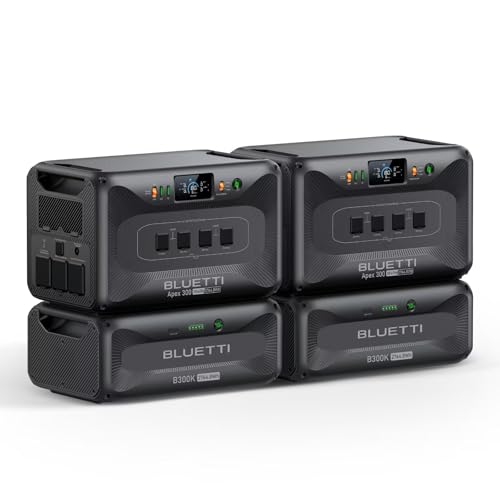
[All-Scenario Power] - Apex 300 (2764.8Wh, 3840W) keeps homes lit, RVs rolling & off-grid sites running. Parallel 2-3 units (5.5-8.3kWh), expand to 58kWh with B300K. Never powerless.

[All-Scenario Power] - Apex 300 (2764.8Wh, 3840W) keeps homes lit, RVs rolling & off-grid sites running. Parallel 2-3 units (5.5-8.3kWh), expand to 58kWh with B300K. Never powerless.

[2200W Rapid Charging] Go from Zero to Full in Under Two Hours. Recharge at top speed with 2200W AC input (0–100% in 1.44 hours) or harness maximum sunlight with up to 2400W solar input. The built-in 2200W bi-directional inverter in the PowerMax 6000 enables ultra-fast AC charging, delivering a full battery in as little as 1.96 hours. Power up faster, stay out longer
Safety Margin: Why It Matters
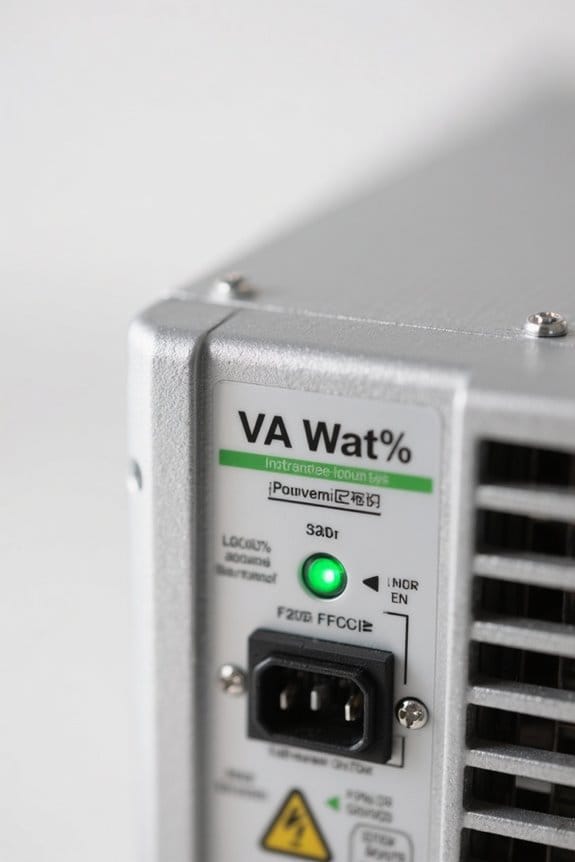
Ensuring reliability in a UPS system often hinges on the implementation of a safety margin. A recommended safety margin of 20-25% above the calculated power requirement accommodates unexpected spikes in power consumption, protecting critical loads during high-demand periods. Operating a UPS at maximum capacity risks overheating and reduces its lifespan, which is why this margin is essential for prolonged equipment effectiveness. Additionally, the safety margin accounts for gradual degradation over time, sustaining performance levels despite aging components. It also allows for future-proofing, enabling easy integration of additional equipment or increased power needs. Ultimately, a well-planned safety margin enhances the reliability of power infrastructure, shielding sensitive equipment from potential failures during outages or fluctuations. Surge protection ratings are crucial in determining how well the UPS can handle power spikes, ensuring your systems remain safe.
Recommended Products

[LiFePO4 Battery & Ultra-long Endurance]: This lithium UPS features a cutting-edge Lithium Iron Phosphate (LiFePO4) Battery Pack (51.2V, 9Ah), offering an impressive lifespan of over 10 years and more than 3,000 charge cycles. Compared to conventional lead-acid batteries, it reduces the total cost of ownership (TCO) by over 40%. The advanced battery technology ensures long-lasting performance while removing the need for frequent replacements, making it a cost-effective and reliable power backup solution (Note: The LiFePO4 battery does not require replacement or any other hassle maintainance like Lead-acid battery)

1500VA/1000W PFC Sine Wave Battery Backup Uninterruptible Power Supply (UPS) System designed to support active PFC and conventional power supplies; Safeguards computers, workstations, network devices, and telecom equipment

** PLEASE SEE PICTURE for wall outlet requirement** Requires NEMA 5-20 wall outlet. If 20 amp wall outlet is unavailable, please purchase optional (NEMA 5-15P to 5-15/20R adaptor plug)
Assessing Runtime Needs
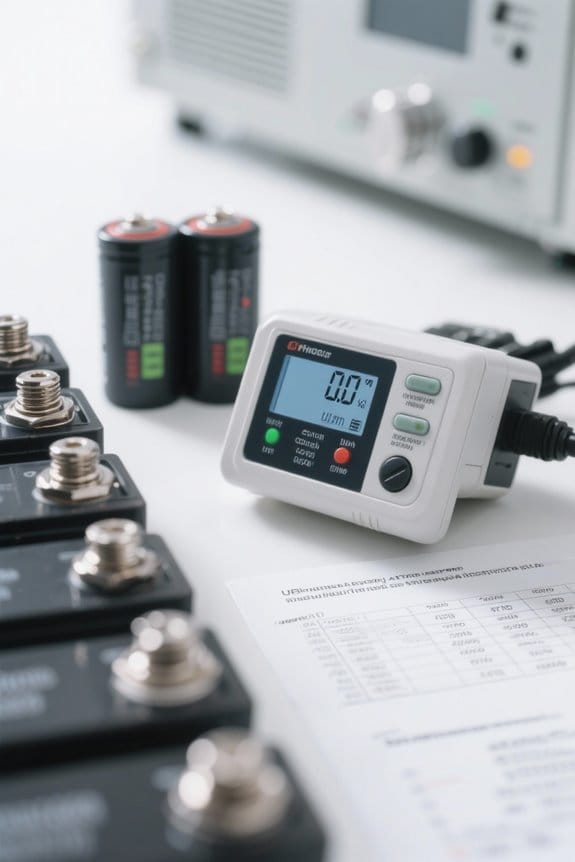
How can one effectively assess runtime needs for a UPS system? Analyzing total load requirements is essential, as heavier loads markedly reduce available battery runtime. For instance, a 1 kVA UPS typically supports a 900-watt load for approximately 11 minutes, while a 2 kVA system can extend this to about 24 minutes. The desired runtime may vary, with common benchmarks of 10-15 minutes recommended for safe shutdown, and longer durations for extended operations. Selecting systems with modular battery capacity is advisable, as they allow for flexible battery pack expansions. Additionally, the choice between lithium-ion and lead-acid batteries affects not only runtime effectiveness but also recharge speed during outages, influencing overall UPS efficiency. Furthermore, understanding the differences between Standby and Line-Interactive UPS systems can help users make informed decisions based on their specific requirements.
Evaluating Equipment Type and Inrush Current
Selecting the appropriate Uninterruptible Power Supply (UPS) involves not only runtime needs but also the examination of equipment types and their inrush current. Certain devices, such as transformers, motors, and compressors, can draw inrush currents several times greater than their normal running load. This spike greatly impacts UPS sizing, as it dictates the total power capacity required to prevent system overload during startup. Evaluating equipment specifications, including inrush current, is essential to verify the selected UPS meets both steady-state and dynamic demands. Ideally, a UPS should provide 2-3 times the normal running load to accommodate these transient spikes, thereby maintaining system stability and reliability during critical operations. Understanding these factors assures effective UPS performance, especially when considering surge protection needs to safeguard sensitive devices from voltage spikes.
Planning for Future Expansion
When planning for future expansion, organizations must account for potential increases in equipment and power demands over time. It is recommended to size a UPS with a margin of 20-25% above the current load to guarantee adequate capacity for emerging needs. By anticipating the maximum load expected over the next five years, companies can better prepare for technological advancements and additional devices. Modular UPS designs offer scalable capacity, allowing for efficient upgrades without a complete system overhaul. Additionally, it is essential to regularly review the UPS setup to adapt to changes in technology and operational requirements. This proactive approach aids in maintaining an effective power supply system, ready to support future expansion needs seamlessly. Incorporating power line conditioners can further enhance the reliability of the power supply for sensitive electronic devices.
Recommended Products

500VA / 1350W Line-Interactive Pure Sine Wave UPS: Delivers pure sine wave output to protect servers, networking systems, and sensitive peripherals from data loss and electrical damage.

UNINTERRUPTED GAMEPLAY: Stay in the match even during power outages with 1500VA/900W of reliable battery backup designed for high-performance gaming PCs and consoles

2000VA/1200W Uninterruptible Power Supply (UPS) battery backup system with line interactive topology with simulated sine wave output
Choosing the Right UPS Type for Your Needs
Choosing the right type of uninterruptible power supply (UPS) is vital to guarantee that equipment remains protected and operational during power disturbances. UPS manufacturers offer various models tailored to different needs. For sensitive devices, an online (double-conversion) UPS guarantees zero transfer time, delivering critical power without interruption. In contrast, standby (offline) UPS systems are more economical, suitable for non-critical applications but can fail during voltage fluctuations. Line-interactive UPS systems provide voltage regulation without battery activation, ideal for small servers. Additionally, the selected UPS must consider the power factor; a 1 kVA UPS with a 0.9 power factor supports only 900 watts. Evaluating runtime requirements is also important, as modular battery systems can expand backup power for longer outages. Furthermore, understanding the types of UPS can help users select the best option for their specific applications.
Frequently Asked Questions
How to Calculate What Size UPS You Need?
To calculate the necessary UPS size, one must perform a load estimation, conduct a runtime analysis, and determine the appropriate battery capacity to guarantee reliable performance during power outages, accommodating future equipment growth.
Is 1500VA the Same as 1500 Watts?
A 1500VA UPS does not equal 1500 watts due to power factor differences. UPS capacity comparisons reveal that wattage implications notably affect usable power, as efficiency determines the actual output available for connected devices.
What Is the VA Rating of UPS Compared to Watts?
The VA rating of a UPS reflects its overall capacity, while watts indicate real power. VA conversion accounts for UPS efficiency, often resulting in lower wattage due to reactive power, affecting the power rating used for calculations.
How to Calculate Power Factor for UPS?
To calculate power factor, divide the real power (watts) by apparent power (VA). This ratio highlights UPS efficiency and aids in load management, ensuring ideal performance while addressing potential inefficiencies in power usage.


