As an Amazon Associate, we earn from qualifying purchases. Some links on this site are affiliate links at no extra cost to you. Our recommendations are based on thorough research and editorial judgment.


What Is an Uninterruptible Power Supply and Why It Matters

An Uninterruptible Power Supply (UPS) is a device that provides emergency power to connected equipment during outages. It switches to stored energy within milliseconds, ensuring operational continuity. UPS units protect against voltage spikes, sags, and provide critical battery backup, commonly lasting 5 to 15 minutes for safe shutdowns. They come in three types: standby, line-interactive, and online, each catering to different power needs. Understanding these features is essential for effective power protection, and there is more to explore regarding their benefits.
Key Takeaways
- An Uninterruptible Power Supply (UPS) provides emergency power, ensuring immediate operation during outages within milliseconds.
- It protects sensitive equipment from voltage spikes, sags, and high-frequency noise, maintaining power quality.
- A UPS prevents data loss and ensures operational continuity, particularly essential in healthcare and IT sectors.
- Different UPS types, like standby, line-interactive, and online, cater to various power demands and reliability needs.
- Investing in a UPS enhances productivity by providing battery backup for safe system shutdowns during power failures.
What Is a UPS?
You may be interested


What Is a UPS?
An Uninterruptible Power Supply (UPS) serves as an essential safety net for electronic devices during power interruptions. This device guarantees immediate operation by switching to stored energy within milliseconds, providing emergency power when utility services fail. A typical UPS system includes a rectifier, battery, inverter, and a static bypass switch, all designed to protect connected equipment from electricity quality issues such as voltage spikes and sags. There are three main types of UPS: standby, line-interactive, and online, each offering varying levels of power protection and efficiency. The battery lifespan varies, with lead-acid options lasting approximately 4 to 5 years, while newer lithium-ion batteries typically provide longer service and require less maintenance, making them a more advanced choice for reliable power supply. Choosing a UPS with high power capacity ensures that multiple devices can be supported during outages.
Why an Uninterruptible Power Supply Is Critically Important

In many situations, an uninterruptible power supply (UPS) provides essential protection against power disruptions that can jeopardize equipment and data integrity. By delivering immediate backup power during outages, UPS systems help avoid data loss and guarantee the operational continuity of critical equipment. They are particularly important in environments reliant on sensitive electronic equipment, safeguarding against common electrical problems like voltage spikes and electrical noise. Typically, a UPS offers a runtime of 5 to 15 minutes, giving users time to save work and perform safe shutdowns. This is especially significant in sectors such as healthcare and information technology, where brief power loss can have serious repercussions. Therefore, investing in a UPS is vital for both households and businesses to enhance productivity. Additionally, selecting a UPS with automatic voltage regulation can further enhance power stability and protect devices from fluctuations.
Recommended Products

INTRODUCTION - WTTTOOLS 1200 W handheld 2-in-1 air-cooled laser welding machine features a lightweight design and compact size, making it easy to carry in your car. Output power: 1200 W. Input Voltage: 220V. Rated Power: 4kW. Fiber Cable Length: 5m. Gross Volume: 0.1m3. Weld Gun Weight: 1.4lbs. Scan Width: 0-5mm. Gross weight: 70.56 lbs. Wire Feeder Weight: 33 lbs. Machine Dimension: 21.7*12.6*21.7in. Package Included: 2-in-1 air-cooled laser welder*1, laser welding nozzles set*1, wire feeder*1. Laser Class: Class 1. Output Power: 0.39mW.

5000VA/4500W Sinewave Uninterruptible Power Supply (UPS): Uses sine wave output to provide battery backup power for Active PFC & conventional power supplies; REMOTE MANAGEMENT: Requires optional RMCARD205 management card (sold separately)

ADVANCED PURE SINE WAVE UPS: 5000VA/4500W line interactive system compensates for power fluctuations, protects against equipment damage, and prevents data loss in the event of a power disturbance
The Main Types of a UPS Power Supply Explained

Understanding the various types of uninterruptible power supply (UPS) systems is important for anyone looking to safeguard their electrical devices and data. The three main types are Standby UPS, Line-Interactive UPS, and Online UPS. Standby UPS provides basic battery backup, switching to battery power during outages after a 25-millisecond changeover, suitable for less-critical devices. In contrast, Line-Interactive UPS incorporates Automatic Voltage Regulation (AVR) to handle minor fluctuations without engaging the battery, enhancing efficiency and battery lifespan. Online UPS, utilizing double conversion technology, delivers constant, high-quality power without switching time, making it ideal for sensitive electronic equipment like those found in data centers. Each type meets distinct power demands and reliability requirements, ensuring effective power protection based on specific applications. Additionally, understanding battery lifespan is crucial for maintaining optimal UPS performance and planning for timely replacements.
Recommended Products

GXT4-8000RT208 IS OBSOLETE THE REPLACEMENT IS GXT5-8000MVRT6UXLN

Large 5000VA/4000W output capacity with full-time sine wave output offers guaranteed compatibility with all equipment types

LITHIUM-ION BATTERIES: Lithium-ion batteries last twice as long as traditional VRLA batteries, or longer.
How to Choose the Right Power Protection Solution

How can one effectively choose the right power protection solution? When selecting a UPS power supply, ascertain that the voltage rating is at least 1.2 times the total load of sensitive electronic equipment to prevent overloads. Consider the type of UPS: a Standby UPS is suitable for basic needs, while an Online UPS is essential for mission-critical applications requiring uninterrupted power. Evaluate runtime, as typical UPS systems provide backup for 10-15 minutes; extended runtime can be achieved by adding battery packs. Additionally, examine battery technology; lithium-ion batteries last longer and need less maintenance than traditional VRLA batteries. Finally, prioritize performance monitoring features that provide alerts for issues like overheating and include USB ports for managing power settings efficiently. It’s also important to consider pure sine wave output, as it is essential for powering sensitive electronics without causing operational noise.
Common Power Problems Addressed by UPS Technologies

Although power inconsistencies are common, Uninterruptible Power Supply (UPS) technologies effectively address a range of issues that can disrupt electronic equipment. UPS units provide surge protection to prevent voltage spikes from damaging sensitive electronic components while offering battery backup during utility failures. They also combat voltage sags and brownouts through automatic voltage regulation (AVR), stabilizing the power supply for consistent performance. Additionally, UPS systems filter high-frequency noise and mitigate harmonic distortion to enhance power quality, ensuring ideal functioning of connected devices. By maintaining backup power and improving overall electrical stability, UPS technologies play an essential role in safeguarding businesses from costly downtime and equipment damage, especially during extreme weather events or unexpected outages. Moreover, selecting a model based on individual power needs ensures optimal protection for your specific electronic setup.
Recommended Products

【10 Years of Peace of Mind】Trusted by 6M+ users worldwide, our leading PV inverter brand provides a 10-year product quality assurance and local support, ensuring fast, reliable service and assistance whenever you need it, right in your area.

Handles Even the Big Appliances: Run major home appliances with 7200W of rated power (14,400W surge). Supports both 120V and 240V for powerful more devices, even a 5-ton AC for comfortable indoor temperatures or a water heater for a hot shower.
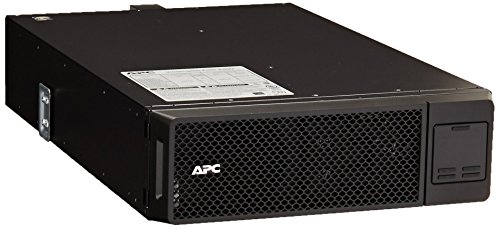
5000 VA/4250 W - 208 V AC - 3U rack-mountable - 2, 2 x NEMA L6-20R, NEMA L6-30R
The Role of Batteries in Uninterruptible Power Supply Systems
Batteries serve as the essential backbone of Uninterruptible Power Supply (UPS) systems, storing electrical energy to provide backup power during outages or voltage fluctuations. The most commonly used types are Valve-Regulated Lead Acid (VRLA) batteries, which typically offer a battery life of 3 to 10 years, and Lithium-ion batteries, known for their extended lifespan and lower maintenance needs. Regular monitoring and maintenance are vital, as batteries represent the most frequent point of failure in UPS systems. The capacity and run time depend on the battery’s size and discharge rate, necessitating careful calculation of the total load. Advanced UPS systems often utilize modular battery configurations, allowing for easy replacement and hot swapping without disrupting power to connected devices. Additionally, understanding surge protection ratings is crucial for ensuring connected devices are safeguarded against voltage spikes during outages.
Frequently Asked Questions
Why Is It Important to Use an Uninterruptible Power Supply?
Utilizing an uninterruptible power supply enhances power protection and voltage regulation, ensuring system stability and data integrity. It promotes equipment longevity, mitigates outage risks, enhances cost efficiency, and secures critical systems with reliable emergency backup during failures.
What Are the Cons of Uninterruptible Power Supply?
Uninterruptible Power Supplies offer a delightful array of cons: costly maintenance, bulky sizes, limited backup durations, and noise headaches. Their finite battery lifespan and installation complexities challenge compatibility, while heat generation and power capacity may frustrate users.
Why Is UPS so Important?
UPS systems enhance power reliability and data protection, ensuring equipment longevity and emergency preparedness. By offering surge protection and mitigating downtime, they provide cost efficiency across diverse usage scenarios, addressing specific technical specifications and installation requirements effectively.
How Many Hours Is an Uninterruptible Power Supply Good For?
An uninterruptible power supply typically provides 5 to 15 minutes of runtime, influenced by battery capacity and load considerations. Model comparisons reveal variations affected by lifespan limits, maintenance tips, energy efficiency, and pricing factors in various usage scenarios.


