As an Amazon Associate, we earn from qualifying purchases. Some links on this site are affiliate links at no extra cost to you. Our recommendations are based on thorough research and editorial judgment.


USB‑C Power Delivery Explained: Profiles, E‑Markers, and 240W

USB-C Power Delivery (PD) is a technology that enables power transfer of up to 240W, sufficient for charging larger devices like laptops. It utilizes dynamic power negotiation to optimize energy management and supports various voltage profiles, including 5V to 48V. E-Marker chips enhance safety and functionality by relaying critical information about power and data capabilities within cables rated above 3A. This innovation guarantees efficient and safe charging, and there’s much more to explore about its applications and future developments.
Key Takeaways
- USB-C Power Delivery (PD) supports dynamic power negotiation, allowing power levels up to 240W, especially beneficial for charging laptops and larger devices.
- The USB PD 3.1 specification includes multiple voltage profiles: 5V, 9V, 12V, 15V, 28V, 36V, and 48V for versatile charging needs.
- E-Marker chips are essential in USB-C cables above 3A, ensuring safety and optimal performance by communicating power ratings and data transfer capabilities.
- High-speed data transfer occurs simultaneously while charging, increasing device versatility and user convenience during power delivery.
- The USB-C standard promotes sustainability, reducing electronic waste by unifying charging solutions across a wide range of compatible devices.
Understanding USB-C Power Delivery
You may be interested
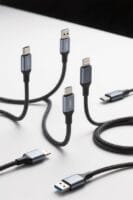
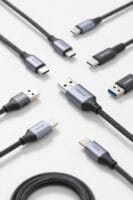
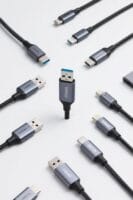
USB-C Power Delivery (PD) revolutionizes the way devices receive power, providing a significant upgrade from previous USB standards. It enables power transfer of up to 240W at 48V/5A, far exceeding the 15W limit of older versions. Essential for supporting higher power levels, the E-marker chip in USB-C cables guarantees compatibility by providing data about the cable’s capabilities. The dynamic power adjustment feature allows devices to negotiate their power needs, which enhances charging efficiency and safety. With the USB PD 3.1 specification, released in 2021, users benefit from improved voltage profiles and greater power delivery, streamlining the charging ecosystem. Additionally, USB PD is backward compatible, allowing older devices a reliable means of operation without compromising on the advantages for newer technology. Furthermore, fast charging capabilities of USB-C cables can significantly reduce overall charging time, making them a preferred choice for users with high-capacity devices.
How USB-C PD Works

Through a sophisticated system of dynamic power negotiation, the operation of Power Delivery (PD) enhances the way devices manage their energy needs. USB-C PD allows devices to communicate their power requirements, thereby optimizing charging efficiency. This system supports a maximum power of 240W at 48V and 5A, far surpassing earlier USB standards. E-Marker chips integrated into USB-C cables are essential; they relay information about the maximum current and power levels supported, ensuring safe charging. In addition, USB-C PD features multiple voltage profiles, including fixed voltages of 28V, 36V, and 48V, catering to various power demands. Importantly, it facilitates high-speed data transfer while charging, improving the versatility of devices and enhancing overall power management. Furthermore, Thunderbolt 4 cables offer enhanced performance, supporting simultaneous data transfer and charging at maximum efficiency.
Key Features of USB-C Power Delivery
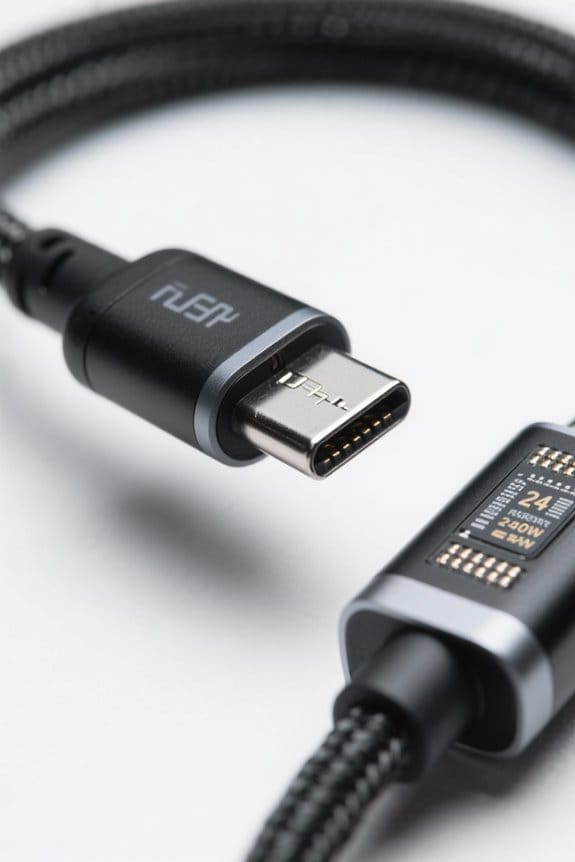
An array of key features sets USB-C Power Delivery apart from previous charging standards. USB-C Power Delivery allows power levels to reach up to 240 watts, far exceeding the 15 watts typical of earlier standards. This capability is vital for powering larger devices like laptops. The Type-C cable and connector are reversible, making connections hassle-free, enhancing user convenience. Moreover, the USB PD protocol supports dynamic power adjustment, meaning it can modify power based on the immediate requirements of connected devices. This guarantees ideal efficiency while charging. In addition, USB-C Power Delivery offers compatibility with various devices without being brand-specific, making it a versatile choice for consumers. E-Marker chips within the Type-C cable communicate essential information regarding power and data capabilities. Additionally, effective fast charging capabilities ensure that users can quickly power up their devices, reducing downtime.
Recommended Products

ULTIMATE SELF-SUSTAINING HOME KIT – 4096Wh capacity + dual 240W panels. Complete off-grid backup for prolonged outages.

[Optimized Off-Grid Power] This bundle pairs the high-performance Mega 1 Lite (1024Wh/2000W) with a powerful 240W foldable solar panel. It’s the ideal "Golden Ratio" setup for consistent daily energy for RVers and overlanders.

【EXCLUSIVELY FOR MAC: DUAL CHIP ARCHITECTURE】 Engineered specifically for the Mac ecosystem, this is the world's first docking station utilizing Dual 80/120Gpbs Silicon. By bypassing traditional bandwidth limits, it delivers a staggering 80-120Gbps, providing the massive throughput required for high-end macOS workflows without lag or flicker.
The Role of E-Marker Chips

E-Marker chips are vital components in USB-C cables that enhance the functionality and safety of power delivery systems. These chips provide identification data regarding the cable’s capabilities, helping devices communicate their power requirements effectively. USB Power Delivery standards dictate that cables rated for currents above 3A must include E-Marker chips, ensuring safe and efficient operation. E-Marker chips contain information about power rating and supported data transfer speeds, enabling compliant devices to negotiate ideal charging conditions. This technology supports higher power delivery levels, reaching up to 240W under the latest USB PD 3.1 standard. Consequently, cables equipped with E-Marker chips are significant for maximizing performance in both charging cables and data transfer applications. Additionally, cables with high data transfer speeds ensure optimal performance when connecting devices.
Recommended Products

【3-in-1 Transmitter&Receiver&Monitor】Accsoon CineView M7H Pro hdmi camera filed monitor integrates a monitor, transmitter, and receiver into one compact unit. suiting every shooting scenario. Monitor Mode: Connect via HDMI/3G-SDI for a pro 7-inch wired monitor (clear, stable monitoring). RX Mode: Built-in 2.4GHz+5GHz dual-band, pair with CineView Master 4K/4K Lite/SE 4K/HE/SE/2 SDI/QUAD transmitters for 1200FT/350m range, 60ms latency. TX Mode: Works with CineView Master 4K/4K Lite/SE 4K receivers, M7 Pro/M7H Pro RX mode and smart And-roid & iOS devices, total up to 4 devices for real-time monitoring

HIGH-SPEED DATA TRANSFER: USB4 certified cable supports 40Gbps data transfer speeds with backward compatibility for 20Gbps, 10Gbps, 5Gbps, 480Mbps, 12Mbps, and 1.5Mbps for seamless connectivity across all USB versions from 1.0 to 4.0.

Up to 240W PD3.1 Fast Charging: Utilizing the advanced USB PD 3.1 fast charging protocol, our extension cable & short cables support high-speed charging up to 240W (48V 5A) output when used with a compatible charger, compatible with virtually any USB-C device from phones and tablets to laptops
USB-C PD Profiles Explained
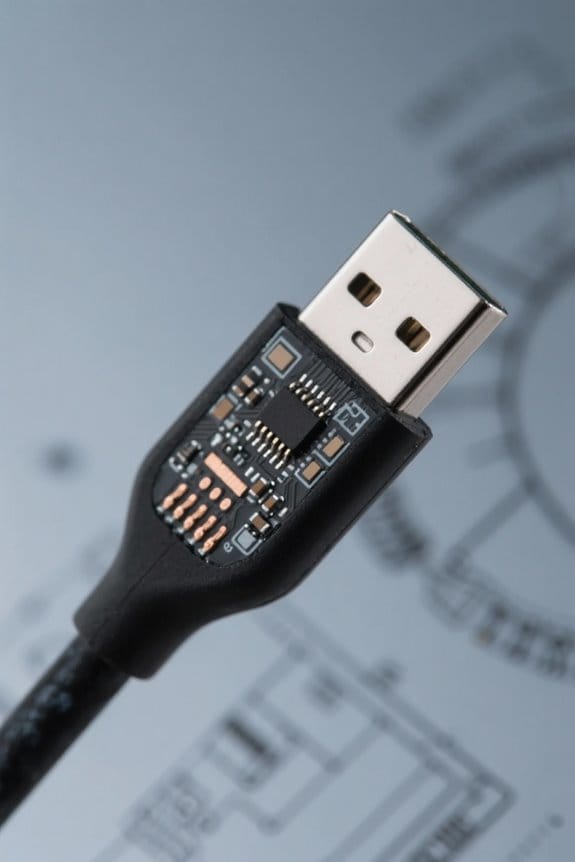
USB-C Power Delivery (PD) profiles play an important role in the charging ecosystem by allowing devices to negotiate different power levels based on their specific requirements. These PD profiles support adjustable voltage options, such as 5V, 9V, 12V, 15V, and the new 28V, 36V, and 48V introduced in PD 3.1. This latest standard greatly increases power output capabilities up to 240W, compared to the previous 100W limit. E-Marker chips embedded in USB-C connectors are vital for identifying each cable’s abilities, facilitating proper power management during charging. This communication enables efficient fast charging while preventing overheating, assuring that devices receive suitable power levels tailored to their specific needs as defined by the USB Power Delivery protocol. Additionally, the 240W power delivery capabilities of modern USB-C cables make them essential for powering high-performance laptops and devices.
Power Delivery Through the Generations
As technology advanced, so too did the capabilities of power delivery systems, which now enable a broader range of devices to charge quickly and efficiently. USB Power Delivery (PD) evolved from initial limitations of 100W to support higher power levels of 240W at 48V/5A. The introduction of USB PD 2.0 introduced dynamic power profiles, allowing devices to negotiate their charging requirements. Subsequently, USB PD 3.0 incorporated real-time communication, enhancing battery longevity and health by adapting power levels dynamically. The latest, USB PD 3.1, offers adjustable voltage options exceeding 20V for tailored power distribution. Additionally, E-Marker chips became essential for ensuring compatibility and safe power management, marking significant progress in the evolution of power delivery standards across generations. This evolution parallels the advancements in USB 3.1 cables, which support faster data transfer and charging capabilities.
USB-C PD 3.0 vs. USB-C PD 3.1
In the domain of technology, USB Power Delivery has undergone significant enhancements, with USB PD 3.0 and USB PD 3.1 being two pivotal standards. USB-C PD 3.0 supports power delivery of up to 100W, allowing for high-speed charging across various devices. In contrast, USB-C PD 3.1 greatly expands this capability to 240W, catering to demanding devices like laptops and monitors. PD 3.1 introduces adjustable voltage supply modes, enabling efficient negotiation for specific voltage needs. Moreover, it mandates eMarked cables for power delivery above 60W, enhancing safety and compatibility. Additionally, PD 3.1 offers improved diagnostics, allowing devices to communicate potential charging issues, thereby providing better safety measures compared to the previous PD 3.0 standard. High wattage cables like the INIU’s 240W option exemplify the advancements in this technology, ensuring rapid charging capabilities for high-demand devices.
Real-World Applications of USB-C Power Delivery
Power delivery technology has transformed the way consumers interact with their devices, allowing for efficient charging and data transfer through a single connection. USB Power Delivery enables charging speeds up to 240W, which greatly enhances user experience when powering various devices. For instance, Type-C cables facilitate the dual functionality of monitors that can charge laptops while simultaneously displaying content. This is accomplished through dynamic power negotiation, ensuring devices optimize their power needs while preventing overheating. E-Marker chips within USB-C cables improve compatibility and power management, allowing safe and efficient charging. This adaptability means power bricks can deliver higher levels of power to different devices, reducing the need for multiple chargers and further streamlining daily device usage. Additionally, high wattage charging is a key factor in maximizing efficiency and convenience for users.
Recommended Products

【PLUG & PLAY ALL-IN-ONE SOLUTION】– No DIY stress. Unlike traditional eGPU enclosures that require a separate graphics card and bulky power supply, Nimo eGPU integrates the AMD RX 7600M XT and a 240W PSU into one system. Just connect and game instantly.

【Pro-Level Performance: RTX 4060 Laptop Level】 Boost your portable device with the AMD Radeon RX 7600M XT (RDNA3). With a full 120W TGP and 8GB GDDR6, it delivers performance comparable to an RTX 4060 Laptop GPU. Perfect for running AAA titles at high FPS and accelerating AI model training on your thin-and-light laptop or handheld.

Next-generation Thunderbolt 5: Includes dual Thunderbolt 5 ports that provide ultra-fast bandwidth, supporting high-performance external peripherals and accessories.
Future of USB-C Power Delivery Technology
The future of USB-C Power Delivery technology promises to redefine device charging and connectivity standards markedly. With the latest USB Power Delivery 3.1, power delivery has increased to 240W, enabling faster charging across various devices, including laptops. Future implementations will prioritize dynamic power negotiation, allowing devices to adjust power needs in real time. This optimization enhances charging efficiency and prolongs battery life. Additionally, the integration of E-Marker chips in USB-C cables is essential, as they guarantee safe and efficient power transfer by communicating cable specifications. As the USB-C standard gains traction, certified USB devices are expected to further promote sustainability and reduce electronic waste, providing a unified charging solution for more electronic devices, including future higher voltage profiles. Moreover, the high mAh capacities of power banks will play a crucial role in supporting these advancements, allowing for multiple device charges without sacrificing portability.
Frequently Asked Questions
What Are the Different USB-C PD Power Profiles?
The different USB-C PD power profiles include 5V/3A, 9V/3A, 15V/3A, and 20V/5A. This system enhances charging speed, device compatibility, power management, and reflects historical evolution while hinting at future developments in cable construction and power negotiation.
What Is a 240W USB-C Charge Cable Used For?
A 240W USB-C charge cable is utilized for high power devices including laptops, gaming accessories, power banks, and charging hubs. It supports fast charging for electric vehicles and industrial applications, enhancing versatility and efficiency in power distribution.
What Is a USB-C E Marker?
A USB-C E-Marker enhances cable functionality, enabling power negotiation and ensuring data transfer compatibility for devices. It maximizes charging speed, supports USB-C benefits, and facilitates future developments in cable performance and device compatibility.
Can USB-C Handle 240W?
USB-C can indeed handle 240W, revolutionizing charging capabilities for high-power devices. However, successful implementation relies on proper cable specifications, device compatibility, electrical safety measures, efficient heat management, and understanding diverse usage scenarios throughout market availability.


