As an Amazon Associate, we earn from qualifying purchases. Some links on this site are affiliate links at no extra cost to you. Our recommendations are based on thorough research and editorial judgment.


Thermal Management for Enclosed Power Devices

Thermal management is vital for enclosed power devices to prevent overheating and prolong component life. Effective strategies include active cooling methods, like vapor compression systems, and passive solutions, such as vents and reflective coatings. Maintaining operational temperatures between 104°F and 122°F can considerably enhance reliability by up to 50%. Proper airflow design and selection of cooling systems based on thermal load and ambient conditions are essential. These principles help optimize device performance, and more specifics can follow.
Key Takeaways
- Effective thermal management keeps enclosed power devices operating between 104°F to 122°F, enhancing component longevity and reliability.
- Identify heat sources using thermal imaging and temperature sensors to target cooling needs accurately.
- Choose passive cooling methods for low heat scenarios and active systems for high-output applications to optimize thermal management.
- Design proper airflow with exit ports at least 50% larger than entry ports to enhance cooling efficiency in enclosed environments.
- Regularly assess thermal load and select cooling systems according to NEMA ratings to ensure compliance and efficiency in different ambient conditions.
Understanding Heat Generation in Power Devices
You may be interested


When examining the workings of power devices, it is vital to recognize that they generate heat primarily through internal losses associated with their components, such as transformer cores, power switches, and resistors. These components contribute to excessive heat generation, creating a significant thermal load. The relationship between power input, output, and heat dissipation is fundamental; higher power consumption invariably leads to greater heat unless carefully managed. Effective thermal management is necessary to maintain acceptable operating temperatures, as every ten-degree increase can halve component reliability due to thermal stress. Consequently, understanding and controlling heat generation through cooling strategies guarantees peak performance, reduces thermal impact, and enhances longevity by minimizing degradation mechanisms like micro-crack formation in critical components. Moreover, automatic voltage regulation can help manage heat generation by stabilizing power input and reducing fluctuations that contribute to thermal stress.
Recommended Products

HPE PROLIANT DL320 GEN11 5416S 2.0GHZ 16-CORE 1P 64GB-R 8SFF 2X800W SERVER (P69302-005): Powered by one Intel Xeon Gold 5416S Processor, this 1U server delivers exceptional compute performance for virtualized workloads, content delivery networks, VDI, and secure edge applications. Ideal for space-constrained environments needing high performance and flexibility at single-processor economics

Supremely Fast: Over 6000MB/s peak real-world speed

Ultra-fast: over 2x faster than Thunderbolt portable enclosures with up to 3836MB/s real-world performance
Identifying and Measuring Heat Sources

Accurate identification and measurement of heat sources within power device enclosures are essential for effective thermal management. This process often starts with reviewing spec sheets that include details on power consumption and heat dissipation metrics. Identifying heat sources such as transformers and power supplies enables better management strategies. Thermal imaging technology also plays an important role by visualizing hotspots, while handheld IR thermometers allow for quick surface temperature measurements. Installing temperature sensors within electrical enclosures facilitates continuous logging of heat data, which supports ongoing thermal analysis. Additionally, understanding the enclosure’s NEMA rating is critical, as it determines suitable heat management techniques based on sealing capabilities and the intended application of the device. Incorporating cord organization solutions can further enhance the efficiency of thermal management by reducing clutter and improving airflow.
Recommended Products

MODEL TG165-X: 4,800 pixel IR camera measures temperatures from -25°C to 300°C (-13°F to 572°F)

2-in-1 IR Thermometer Gun: Unrivaled and innovative design as an upgrade to digital meat thermometers and temperature guns, The ROOKPRO can measure both internal and surface temperatures, Use as a surface thermometer for a griddle with the IR sensor, and a BBQ thermometer for food with the meat thermometer probe
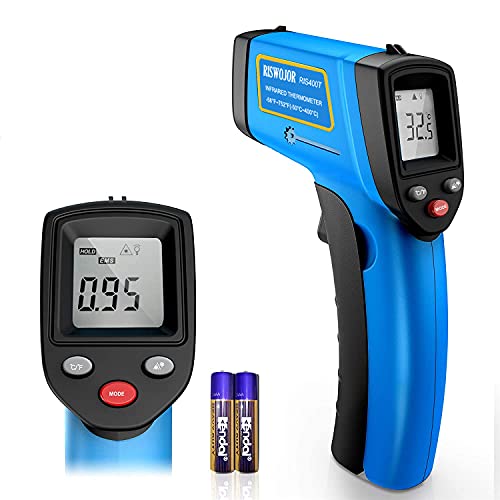
High Accuracy : Laser temperature gun has an object distance of 12:1 . High quality sensors can be used to complete measurements in 0.5 seconds. which is suitable for most daily life.
Effective Cooling Strategies for Enclosures

Effective cooling strategies for enclosures play a significant role in maintaining ideal operating conditions for power devices. Passive methods, such as vents and louvers, benefit low-heat scenarios and moderate temperature rises by facilitating natural convection. For high-output applications, active cooling options like vapor compression and thermoelectric coolers offer robust temperature control. In environments with high ambient temperatures, utilizing a thermal management system with heat exchangers becomes essential. Implementing reflective coatings on dark enclosures can reduce internal temperatures, enhancing passive cooling efficiency. Moreover, for NEMA 4X rated enclosures, a closed-loop system is imperative to effectively manage heat in sealed environments, thereby promoting appropriate heat transfer and ensuring power supplies operate within the ideal internal temperature range of 104° to 122°F. Additionally, safety features such as overvoltage protection are crucial in protecting the longevity of power devices during operation.
Recommended Products
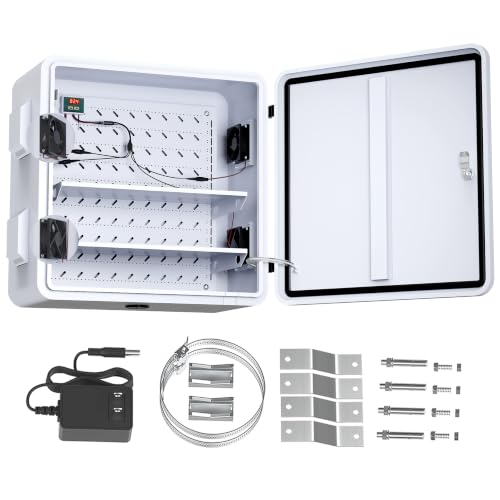
High-Quality Galvanized Steel Construction: Electrical junction box is made of galvanized steel with better anticorrosive properties, one-time molding electrostatic double-layer spraying, crystal-plating process is sturdy and durable, not easy to be deformed, and adapt to a variety of environments

Powerful. Grizzl-E Ultimate 48A charges vehicles up to 48A 11.5kW - 9X faster than a basic charger.

【Safety Protection】Safety and Thunder Protection for Your Circuit and Electrical Devices. Weatherproof IP55/IP66.
Selection Criteria for Cooling Systems

Choosing the right cooling system for enclosed power devices is essential for maintaining ideal performance and preventing overheating. The selection process should focus on the thermal load generated by components, which informs the necessary cooling requirements. Ambient temperatures significantly influence this decision; above-ambient systems are suitable when internal heat exceeds external conditions, while below-ambient systems are critical for greater thermal challenges. The NEMA rating of the sealed enclosure also dictates cooling strategy; NEMA 1 enclosures may suffice with passive cooling, whereas NEMA 4X units often necessitate closed-loop systems. Effective heat dissipation relies on understanding mechanisms like conduction and convection. Additionally, proper airflow design is important; exit ports must be at least 50% larger than entry ports for efficient cooling. Furthermore, ensuring that cooling systems are equipped with reliable surge protection ratings can help safeguard sensitive components from potential damage during thermal fluctuations.
Recommended Products

Items in Kit: 3 Pcs 3Nm Closed loop stepper motor with 1000line encoder. 3 Pcs Nema 23 Closed loop stepper motor driver. 1 x 350W Power Supply and 1 x Mach3 Card.

Items in Kit: 1 x 86HB250-118B: 8.5Nm Closed loop stepper motor, 1 x HBS86H: Nema 34 Closed loop stepper motor driver, 1 x Debugging Cable, 1 x 3m motor and encoder extenstion cables.
The Impact of Thermal Management on Component Longevity

How significantly does thermal management influence the longevity of electrical components? Effective thermal management is essential for maintaining operational temperatures between 104°F and 122°F (40°C to 50°C). Achieving these temperatures can enhance components’ reliability by up to 50% for every ten-degree drop in heat. Elevated temperatures cause degradation in critical components like capacitors and resistors, leading to shorter lifespans. Moreover, consistent cooling practices, including heat sinks within enclosures, can prevent overheating and enhance overall system efficiency. The Arrhenius equation validates that higher operating temperatures accelerate degradation rates, additionally emphasizing the need for effective thermal management. By mitigating dynamic thermal stress, such as micro-cracking, the longevity of electrical equipment is markedly improved, ensuring reliable performance over time. Additionally, surge protectors with high joule ratings can help safeguard sensitive devices from thermal stress caused by power surges.
Frequently Asked Questions
What Materials Are Best for Thermal Insulation in Power Devices?
Ceramic insulation, alongside thermal pads and silicone materials, stands tall as shielded sentinels. Meanwhile, aerogel applications and composite insulators weave lightweight barriers, enhanced by phase change agents and insulation coatings adorning metal substrates, ensuring efficient thermal control.
How Does Humidity Affect Thermal Management in Enclosed Systems?
Humidity levels greatly impact thermal management by introducing moisture challenges and condensation risks. Elevated humidity effects can reduce insulation effectiveness, increase thermal conductivity, and accelerate material degradation, emphasizing the importance of humidity sensors and environmental control in enclosed spaces.
Can Thermal Management Systems Be Retrofitted to Existing Devices?
Thermal management systems can be retrofitted to existing devices, but challenges include installation procedures, material compatibility, and design modifications. Cost considerations, performance metrics, environmental impact, regulatory standards, and user education also play essential roles.
What Role Does Ambient Temperature Play in Thermal Performance?
Can ambient temperature profoundly affect thermal performance? Indeed, ambient temperature effects influence heat transfer dynamics and thermal resistance implications, impacting cooling efficiency variations and insulation thickness considerations, alongside environmental factors that modify airflow management strategies and heat dissipation techniques.
How Often Should Cooling Systems Be Maintained or Inspected?
Cooling systems should undergo maintenance and inspection biannually, adhering to maintenance best practices and inspection criteria. Regular performance evaluation accounts for environmental influences, helping prevent common failures and informing maintenance scheduling and service provider options.


