As an Amazon Associate, we earn from qualifying purchases. Some links on this site are affiliate links at no extra cost to you. Our recommendations are based on thorough research and editorial judgment.


Routing Cables to Minimize EMI and Trip Hazards

Routing cables effectively is essential for minimizing electromagnetic interference (EMI) and trip hazards. Properly separate power and signal cables by at least 12 inches. Use cable trays to keep pathways organized, avoiding high-traffic areas. Employ shielded and twisted pair cables to maintain signal integrity while reducing EMI risks. Additionally, make sure connections are grounded. Label both ends of cables for troubleshooting ease. These strategies not only enhance safety but also improve equipment reliability. Further details on best practices are available.
Key Takeaways
- Separate power and signal cables by at least 12 inches to reduce electromagnetic interference (EMI) and prevent cross-talk.
- Use cable trays to keep wiring organized, maintaining clear paths and minimizing trip hazards in high-traffic areas.
- Route cables to cross at 90-degree angles to limit EMI interactions between different types of cables.
- Label both ends of cables for easy identification and efficient troubleshooting, enhancing overall maintenance safety.
- Implement effective grounding practices to shield against EMI and ensure connections are secure to prevent accidents.
Importance of Cable Organization and Management
You may be interested


Cable organization and management play crucial roles in optimizing the performance and safety of electronic systems. Proper cable routing is essential to minimize electromagnetic interference (EMI) by guaranteeing that power and signal cables remain separate. This technique relies on following recommended separation distances to enhance system performance. Additionally, effective cable management practices, such as utilizing cable trays and raceways sized for current loads with allowances for future growth, guarantee scalability. Labeling wires with their type and destination aids in efficient troubleshooting and maintenance, allowing quick identification of issues. Furthermore, well-maintained cable organization reduces trip hazards, as it prevents wires from crossing high-traffic areas and uses cable holders or surface-mounted raceways to provide safe and clear pathways throughout the workspace. Utilizing cable management systems can further enhance organization and safety by providing structured solutions for various setups.
Strategies for Separating Power and Signal Cables

Maintaining proper separation between power and signal cables is essential for ensuring ideal performance in electronic systems. It is vital to run power cables and signal cables in separate conduits or trays to minimize electromagnetic interference (EMI) and improve signal integrity. A minimum separation distance should be maintained, and when crossing cables is unavoidable, they should intersect at a 90-degree angle to reduce coupling effects. Utilizing twisted pair cables for instrumentation signals can help equalize EMI effects, while shielding protects against external EMI. In addition, adhering to effective cable management practices, such as tightly twisting exposed wires and avoiding loops, further enhances performance and reduces interference risks. Ultimately, these strategies foster a reliable electronic environment. Furthermore, ensuring that surge protectors have a higher joule rating can provide additional protection against electrical issues, enhancing overall system reliability.
Recommended Products
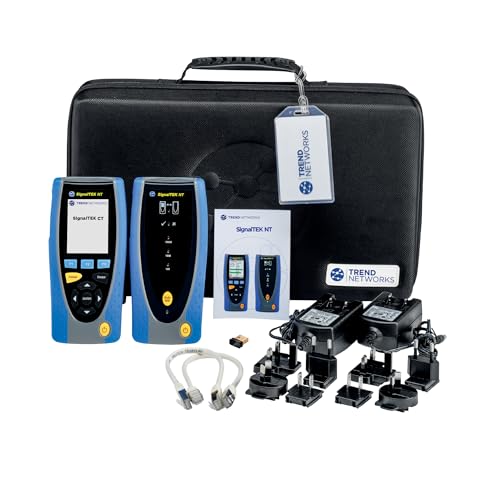
DEPEND ON US: At TREND Networks (formerly IDEAL Networks), our mission is to innovate test solutions that are fast, accurate, and empower network technicians, data installers, and system integrators to better power up their world

SUPERIOR PERFORMANCE: Exceeds CAT5e, CAT6, and CAT7 standards for high-speed data and audio transmission. Ideal for professional use, delivering superior performance in demanding environments, ensuring reliable connections for both ethercon cable and ethernet cable setups.

Premium CAT 8 Shielded (S/FTP), 22AWG solid bare copper, CMP Plenum Bare Copper cable is used for installation in plenum areas such as a space provided for air circulation for heating, ventilation, and air-conditioning which is typically the space between the ceiling. Plenum cable is jacketed with a fire retardant plastic jacket which releases less toxic fumes.
Utilizing Shielded Cables for Enhanced Protection

Shielded cables offer a robust solution for minimizing electromagnetic interference (EMI), vital for maintaining signal integrity in various electronic applications. Utilizing twisted pair shielded cables for instrumentation signals can effectively reduce EMI by equalizing the interference effect on both wires, resulting in more accurate readings. The shield acts as a protective barrier, guaranteeing instrument wires remain less affected by external noise sources. Proper grounding of the shield at one end helps minimize interference and prevents EMI-induced currents. Shielded cables are particularly effective for long distance transmission, as they prevent signal degradation and maintain clarity over extended lengths. Additionally, keeping wiring organized and avoiding loops is essential to secure peak performance and further reduce the risk of interference. Furthermore, using surge protectors with safety features such as overload protection can enhance the overall reliability of electrical systems.
Recommended Products

Premium Composite Cable for Access Control: This robust Access Control Composite Cable combines 18/4C, 22/3PR shielded, 22/2C, and 22/4C stranded copper conductors, each individually shielded for optimal noise resistance. Rated for Plenum (CMP, CL3P, FT6), it ensures reliability and safety in high-demand, noise-sensitive environments.

SHIELDED ETHERCON CABLE- Designed to exceed Cat5e specifications. Unlike Cat6 cables that tend to be stiff and hard to coil, our cat5e cables are specifically designed for superior durability, coil-ability and to excel in entertainment applications.

Belden 8723 2-Pair Audio and Control Cable 1000 Foot
Best Practices for Grounding to Minimize EMI

Effective grounding practices are fundamental for minimizing electromagnetic interference (EMI) in electronic systems, as they can greatly improve the reliability and performance of devices. Implementing single-point grounding is one of the best practices, as it guarantees all equipment shares a common ground reference, reducing electrical noise. Additionally, utilizing balanced lines and differential signaling enhances noise immunity, especially in sensitive applications. It is also essential to connect all metal enclosures to the ground plane to prevent unintended antenna effects that exacerbate EMI. Regular inspection of grounding connections is critical to verify low-resistance paths, as high resistance increases susceptibility to interference. Incorporating ferrite beads and decoupling capacitors further aids in noise reduction, profoundly enhancing overall system performance in industrial environments. Moreover, integrating safety features into the design of electrical systems can further mitigate EMI risks and protect sensitive components.
Recommended Products

Detachable and Reusable:Clip on wire and removable easily. It won't cause any distortion during signal transmission.

High-fidelity signal transmission: OFC (Oxygen-Free Copper) conductor with 3% silver content of Senju solder, to ensure that the audio signal from the source to the terminal to maintain very low loss, high-frequency details and low-frequency dynamic performance balance, suitable for CD player / vinyl turntable to the power amplifier precision transmission.

Implementing Proper Cable Routing Techniques

Proper cable routing techniques play an essential role in reducing electromagnetic interference (EMI) within electronic systems. It is important to separate electrical cables from data lines, ensuring at least a 12-inch distance between them whenever possible. Cable routes should avoid high-traffic areas to minimize trip hazards, and using cable trays can help keep organized pathways. These trays should accommodate current needs and include an additional 30-50% allowance for future growth. Maintaining clear airflow pathways is imperative; properly connected cables should be spaced to prevent overheating. Labeling both ends of cables with type, enclosure number, and destination not only aids in identification but also enhances maintenance efficiency, supporting overall system reliability and reducing downtime during necessary upgrades. Additionally, incorporating built-in circuit protection can further safeguard against overheating and short circuits, ensuring safe operation of connected devices.
Recommended Products

Premium Access Control Composite Cable: This composite cable includes 18/4C, 22/3PR shielded, 22/2C, and 22/4C stranded copper conductors. All cables are Plenum Rated (CMP, CL3P, FT6), ensuring reliability and safety in high-demand environments.

Supports 24 x 2.5" SAS/SATA SSDs & HDDs, up to 7mm in height

Fits 4x M.2 NVMe SSDs of all lengths, 30mm (2230), 42mm (2242), 60mm (2260), 80mm (2280), and 110mm (22110)
Benefits of Twisted Pair Cables in Reducing EMI
As electromagnetic interference (EMI) continues to challenge the reliability of communication systems, twisted pair cables present a compelling solution. The intrinsic design of twisted pair cables reduces electromagnetic interference by equalizing the EMI effects on conducting wires, minimizing noise pickup. This twisting technique stabilizes differential signal transmission, greatly enhancing signal quality and data integrity, especially in industrial settings. Shielded twisted pair cables offer additional protection, incorporating a shielding layer that safeguards against EMI without compromising the ground path for induced currents. These cables maintain excellent signal quality over long distances, making them effective in environments where electrical equipment is susceptible to interference. By utilizing 4-20 mA current signals, twisted pair cables provide improved immunity to EMI, actively preventing errors and indicating cable faults. Furthermore, the use of surge protection ratings in conjunction with twisted pair cables can further enhance the safety and reliability of electrical systems.
Recommended Products

Supports up to 40Gbps data transfer rate.

Braided and metal shielded providing excellent protection from EMI noise. Flexible and easy to strip, so you or your customers can easily install it, even around tight corners

[Extreme Performance] Our shielded Cat6A plenum Ethernet cable supports 1 and 10 Gigabit speeds up to 328ft. Bandwidth tested up to 750MHz. The overall aluminum foil shield helps eliminate cross-talk and prevents electromagnetic interference.
Case Studies: Successful EMI Mitigation in Various Facilities
Identifying successful strategies to mitigate electromagnetic interference (EMI) is crucial for enhancing operational efficiency in various industrial facilities. For instance, a case study at Pentronic in Sweden demonstrated that PR electronics transmitters markedly reduced electrical noise interference, improving temperature measurement accuracy. Similarly, Cool Clean Technologies in the USA reported enhanced system performance after employing PR converters to eliminate electrical noise. Both facilities implemented twisted pair shielded cables, which effectively reduced EMI and safeguarded sensitive instrumentation signals. Additionally, they adopted proper cable management, including the separation of power and signal wiring and various grounding methods. These proactive EMI mitigation strategies not only minimized signal errors but also bolstered overall equipment reliability, underscoring the importance of structured approaches in noisy environments. Moreover, selecting power cables with safety certifications can further enhance the overall safety and performance of electrical installations.
Frequently Asked Questions
How Do You Prevent Tripping Hazards From Cables?
In a world of tangled cords, effective cable management employs floor mats and tape solutions, along with cable ties and strategic furniture placement. Safe routing and regular inspections further minimize tripping hazards, ensuring a secure environment.
What Type of Cable Is Least Susceptible to EMI?
Shielded cables with foil insulation and twisted pairs exhibit the least susceptibility to EMI. Utilizing proper grounding techniques and adhering to EMC standards further enhances signal integrity, particularly in applications involving copper cables for superior performance.
How to Stop EMI Electromagnetic Interference?
To stop EMI, one should implement shielding techniques, utilize grounding methods, engage in effective cable management, install EMI filters, use twisted pairs, construct Faraday cages, and apply conductive coatings to affected areas.
What Is the Best Way to Protect an Extension Cable and Reduce Trip Hazards?
To guarantee extension safety, effective cable management blooms through protective covers, cable wraps, and surface tapes. Grounding techniques and cable channels weave tranquility into environments, reducing trip hazards and harmonizing the flow of daily activities.


